
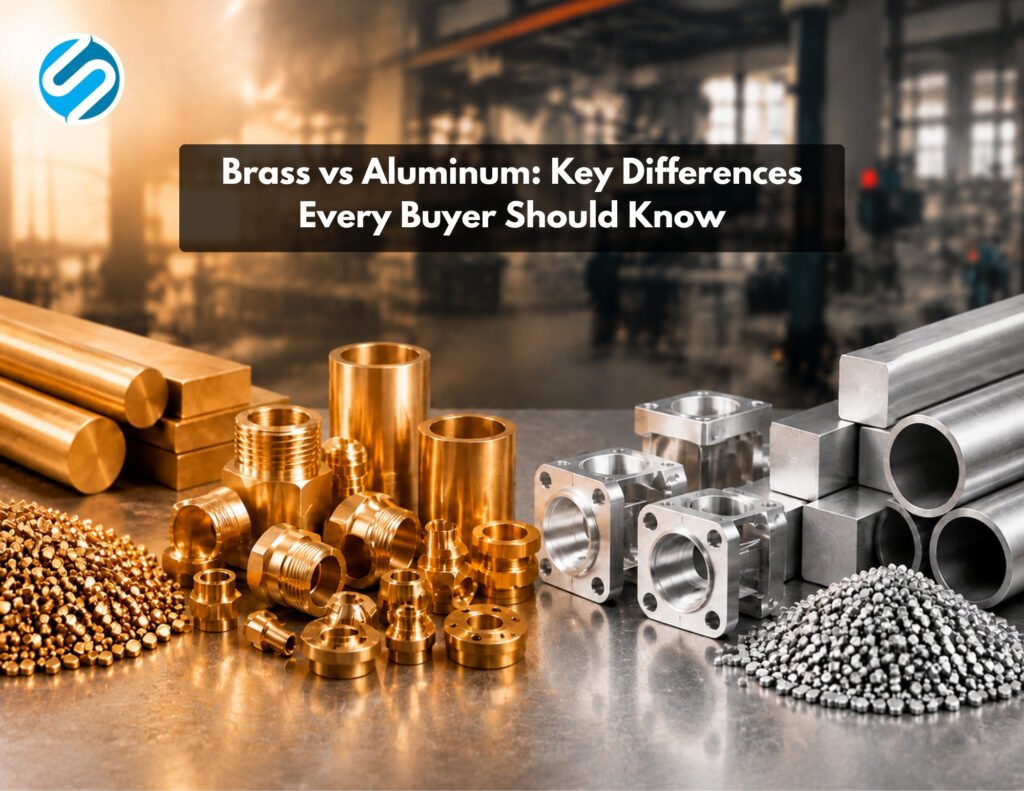
Sourcing plumbing, electrical, or industrial parts and stuck on brass vs aluminum? You’re not alone—it’s one of the first calls buyers have to make, and it’s not always obvious which one fits. These two metals look similar on a spec sheet but behave very differently once they’re actually doing a job. Here’s what separates them, in plain terms, so you’re not guessing when you place the order.
What Makes Brass and Aluminum Different?
Brass is copper mixed with zinc. Aluminum is its own lightweight metal, usually used pure or with a light alloy mix. That one fact about composition explains most of what follows—why one feels heavier in your hand, why one machine is cleaner , and why one shows up in different industries than the other.
Brass earns its place where strength, machinability, and a solid, premium feel matter. Aluminum earns its place where you need something light that can still be shaped into big or complicated parts without piling on weight.
People often want a straight “this one’s better” answer, but honestly, it comes down to the job at hand. Dig into the Brass Characteristics that make this alloy what it is, and you’ll see pretty quickly why it’s still the go-to for so many applications.
Strength and Hardness Compared
Strength Comparison
Ask most engineers about brass vs aluminum strength and they’ll point to brass first for anything under real load or pressure. It holds its shape better under stress and doesn’t give way as fast, which is exactly why valves, fittings, and connectors that get pressure-cycled again and again are usually made from it.
That’s not to say aluminum is weak—far from it. Its real strength is the strength-to-weight ratio. When cutting mass matters more than squeezing out extra strength, aluminum is often the smarter pick.
Hardness Comparison
Brass vs aluminum hardness plays out about the same way. Brass sits higher on the standard hardness scales, so it shrugs off scratches, dents, and everyday wear better than aluminum does.
A few things worth keeping in mind before you pick one over the other:
- Brass keeps its tolerances tight even after a lot of use in threaded or turned parts.
- Aluminum bends and forms into curved or thin-walled shapes more easily.
- Brass shrugs off surface wear better in high-friction spots.
- Aluminum needs less machining force, so production costs tend to come in lower.
- Brass keeps looking good even after years of handling.
- Aluminum takes anodizing well, which makes color-coding parts simple.
If tight tolerances and repeat turning matter for your part, it’s worth understanding how Precision-Made Brass Parts actually get made, because that process is what decides how the part performs once it’s in the field.
Brass vs Aluminum: Density and Weight Comparison
Brass vs aluminum density is probably the easiest difference to actually measure. Brass is much denser, so a brass part will weigh noticeably more than the same-size aluminum one, full stop.
That extra weight isn’t a bad thing, either. In plumbing fittings, electrical connectors, and decorative hardware, that heft is often exactly what reads as “quality” to the person holding it.
Aluminum’s lower density is why aerospace, automotive body panels, and portable equipment all lean on it—every gram you shave off translates into better performance or better fuel economy. And on bulk orders, brass vs aluminum density can shift your total shipping cost more than the raw material price does.
Conductivity: Where Copper Enters the Picture
Neither metal beats pure copper on electrical performance—that’s just physics. So when people talk about copper vs aluminum conductivity, that’s usually the real benchmark they’re measuring both brass and aluminum against.
Brass, being a copper alloy, still carries decent electrical and thermal conductivity, just not as high as pure copper. Aluminum conducts too, and at a fraction of copper’s weight and cost, which is exactly why it’s everywhere in power transmission lines.
For parts that need both conductivity and mechanical strength—terminal blocks, connectors, that kind of thing—brass usually lands in a better spot than plain aluminum when copper is priced out of the picture. Hardness matters here too, and the Hardness of Brass across different grades is what really decides how a component holds up under repeated use.
Corrosion Resistance and Durability
Both metals hold up against corrosion, just not in the same way. Brass builds a natural protective layer from its copper content, and that’s what keeps it going strong in plumbing, marine, and outdoor hardware for years.
Aluminum forms its own oxide layer almost the moment it hits air, which protects it too. But it can struggle more against certain chemicals, and it’s prone to galvanic corrosion if it’s sitting in direct contact with a different metal.
Quick breakdown of where each one tends to hold up best:
- Brass keeps performing in humid or marine conditions over the long haul.
- Aluminum resists corrosion fast but can pit if harsh chemicals get involved.
- Brass fittings rarely need a protective coating for indoor plumbing.
- Aluminum does better outdoors once it’s been anodized.
- Brass holds its look and function with barely any upkeep.
- Aluminum needs to be kept apart from certain metals to dodge galvanic reactions.
Cost and Machinability
Aluminum is usually cheaper as raw material and lighter to ship, so it pulls project costs down, especially on big orders. Brass costs more going in, but it tends to pay that back through less replacement and maintenance down the line.
On the machining floor, brass has a reputation for cutting and turning clean, with smooth finishes and barely any tool wear. Aluminum machines fast too, though it runs hotter and needs a careful hand to avoid burrs on finer parts.
Brass or Aluminium: Which Is Better for Your Application?
There’s no one-size answer to brass or aluminium which is better—it comes down to what the part actually has to do. Need strength, a premium look, and reliability under pressure? Brass is the safer call.
Chasing weight savings, lower cost, or big production runs? Aluminum usually makes more sense. A lot of manufacturers end up using both across one product line, picking whichever metal fits each part’s job.
Before you lock in a material, it helps to talk to someone who works with both metals every day and can point you toward what’ll actually perform for your application. Suraj Brass Industries has been supplying industries across India and abroad for years, and among reliable Brass Suppliers, that kind of long-standing experience is exactly what you want backing your order.
Conclusion
Look, picking between brass and aluminum isn’t really about crowning a winner. It’s about matching the metal to whatever job you’ve got in front of you. When you actually break down brass vs aluminum by what each one delivers, brass gives you strength, density, and the kind of long-term durability that suits precision components and plumbing hardware, while aluminum gives you something lighter and more cost-effective for jobs where weight and volume are what matter most. Get this right upfront and you’ll save yourself the headache of costly reworks down the line.
Frequently Asked Questions
1. Is brass stronger than aluminum?
Pretty much, yeah — at least in anything load-bearing. Brass vs aluminum strength almost always tips toward brass when parts are under repeated pressure or mechanical stress.
2. Which is better for outdoor use, brass or aluminum?
Both do fine outside, honestly. Brass just needs less babysitting over the years, while aluminum holds up nicely once it’s been anodized.
3. Does brass conduct electricity as well as copper?
Not really. If you line up copper vs aluminum conductivity, copper takes it every time — but brass still gets the job done for a lot of electrical fittings.
4. Is aluminum always cheaper than brass?
Upfront, sure, aluminum’s usually the cheaper buy. But once you weigh in brass vs aluminum hardness and how long each one lasts, brass often ends up saving you money since you’re not replacing parts as often.
5. Brass or aluminium which is better for plumbing fittings?
Brass, hands down, for plumbing. It resists corrosion, has that solid heft to it, and just keeps working indoors for years without much fuss.