
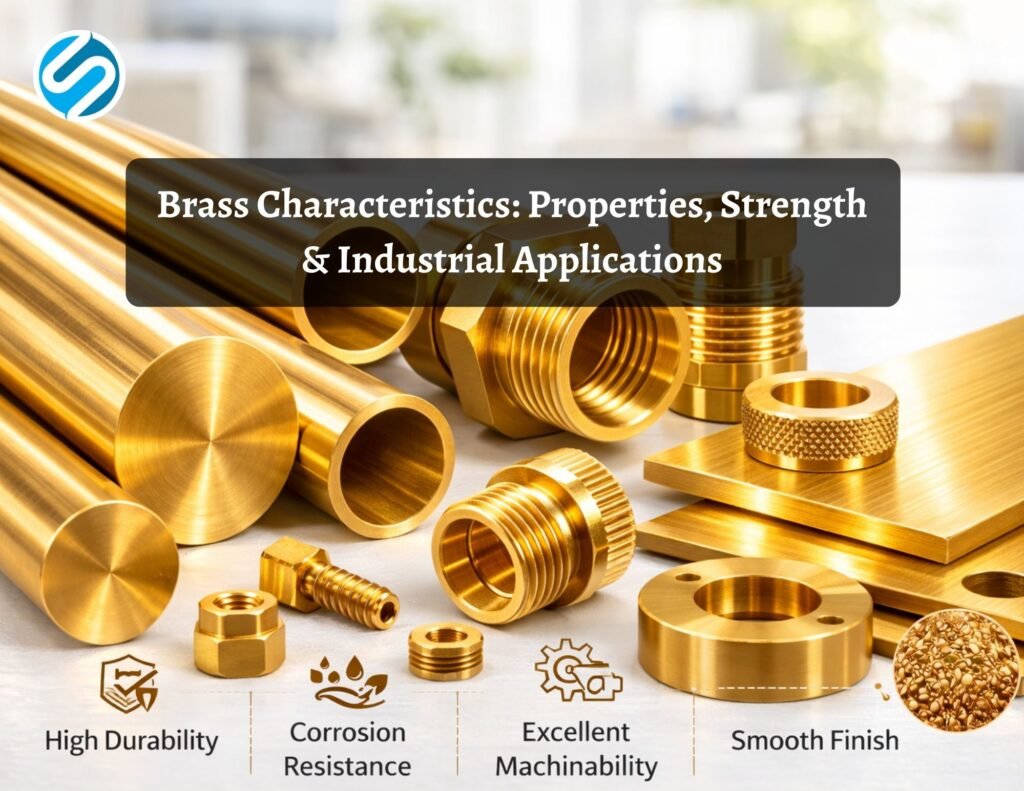
Strength, conductivity, corrosion resistance, and precise machining are key elements of brass characteristics used in various industries. Brass, which is primarily an alloy of copper and zinc, has been used in the electrical, plumbing, automotive, and industrial engineering industries. As one of the most versatile non-ferrous metals, brass supports versatile uses in manufacturing.
The unique characteristics of brass depend largely on its ratio of Copper to Zinc. It has varying unique qualities that greatly determine the strength, the durability, and the workability of the material. This is why most businesses located in places that have a high number of brass manufacturers in Jamnagar, such as the USA, Canada and the rest of the countries in the southern hemisphere, look for quality consistency.
Composition and Core Brass Properties
The strongest brass characteristics come from the composition as it is one of the best examples of studying an alloy. Varying amounts of Zinc in a brass allows it to increase corrosion resistance but it has to balance the ductility and the hardness to achieve that. With other elements such as lead, it is believed that the alloy may improve the ability to be machined, making it more suited for precision engineering.
Key brass properties include:
- Resistance to corrosion.
- Fairly high electrical and thermal conductivity.
- Good machining.
- An attractive surface finish.
- Moderate tensile strength.
For more technical details regarding the brass properties, refer to our guide.
The assorted grades have different overall brass properties and uses in the industry. Some alloys are best for machining while others are better for strength or resistance to the marine industry. Knowing this will help to choose the right material for the right purpose.
Mechanical Strength and Durability
Among the most notable brass characteristics are its mechanical strength and resistive properties to wear. When it comes to tensile strength comparative to other copper alloys, brass is superior. This is what makes it highly reliable for the use in load-bearing fittings and engineered components.
Important mechanical characteristics of brass are:
- High tensile and yield strength.
- High resistance to cracking under stress.
- High stability under variations of stress and temperature.
- High wear resistance in moving parts.
A distinct advantage for brass components is their resistance to rust as compared to their ferrous counterparts. This trait drastically decreases maintenance and prolongs the service life of the components.
The high level of brass durability is simply the reason it is chosen for elements which demand a high level of performance under continuous pressure and vibration.
Machinability and Manufacturing Efficiency
One other salient reason why the value of the brass characteristics is high in varied industries is because of its ease in precision machining. Brass can be cut, drilled and shaped CNC machines at very low tool wear. This leaves the production cost low and the components to be in their exact required dimensions.
Brass is used for:
- Electrical connectors and terminals
- Plumbing valves and fittings
- Precision fasteners
- Components of automotive sensors
The excellent machinability directly contributes to the wide-ranging brass properties and uses seen in connectors, fasteners, valves, and electronic pins. When manufacturers categorize brass alloys, they typically combine them based on their performance. Understanding the different types of brass allows engineers to identify the most appropriate grades for particular functions.
Another significant benefit is cost efficiency, which stands out among the major advantages of brass compared to other non-ferrous materials.
Electrical and Industrial Applications
One of the most useful properties of brass properties in contemporary manufacturing is its conductivity. Although it does not conduct electricity as effectively as pure copper, brass offers a good compromise between strength and conductivity.
Common industrial brass properties and uses include:
- Terminals for power distribution
- Components of switchgear
- Contacts of batteries
- Fittings for plumbing
- Valves for gas
Brass is used for electrical terminals, plug pins, and battery contacts, so it’s conductivity and corrosion resistance is crucial. These characteristics of brass makes it suitable for residential and industrial infrastructures.
In automotive engineering, brass characteristics ensure reliable performance in radiator cores, sensor housings, and electrical components.
Corrosion Resistance and Longevity
One of the most recognized brass characteristics is its corrosion resistance. Brass naturally forms a protective surface layer that reduces oxidation, especially in water-based environments.
The long-term advantages of brass include:
- Resistance to rust and oxidation
- The costs associated with maintenance are lower
- Longer life of the product
- It is recyclable so is better for the environment
These protective qualities add to the overall brass properties and uses, particularly in plumbing and marine systems. The stability found in the characteristics of brass explains why manufacturers worldwide continue to rely on this material.
Jamnagar: A Global Brass Hub
The Jamnagar region of India is famous worldwide for manufacturing brass and precision engineering. The entire ecosystem of suppliers and exporters has contributed to a better understanding of the improvements in brass characteristics and manufacturing.
You can read this very informative document on Jamnagar Brass Industries, to learn more about the region, and its industrial leadership. The city is specializing in precision components which means consistent quality across the entire globe.
Conclusion
In conclusion, the brass characteristics lie in its strength and corrosion resistance as well as its conductivity and ease of machining. These well-balanced attributes allow its use in electric systems, plumbing, parts for automobiles, and industrial engineering. With its versatile use across varying grades, there is a broad range of brass properties and uses.
Brass has numerous characteristics that include long-term durability and manufacturing efficiency. It’s no wonder that engineers all across the world prefer it! Knowing brass characteristics helps industries choose the best alloy. This also helps to improve the functionality of any developed product while ensuring that they stay high quality and competitive in the marketplace.