
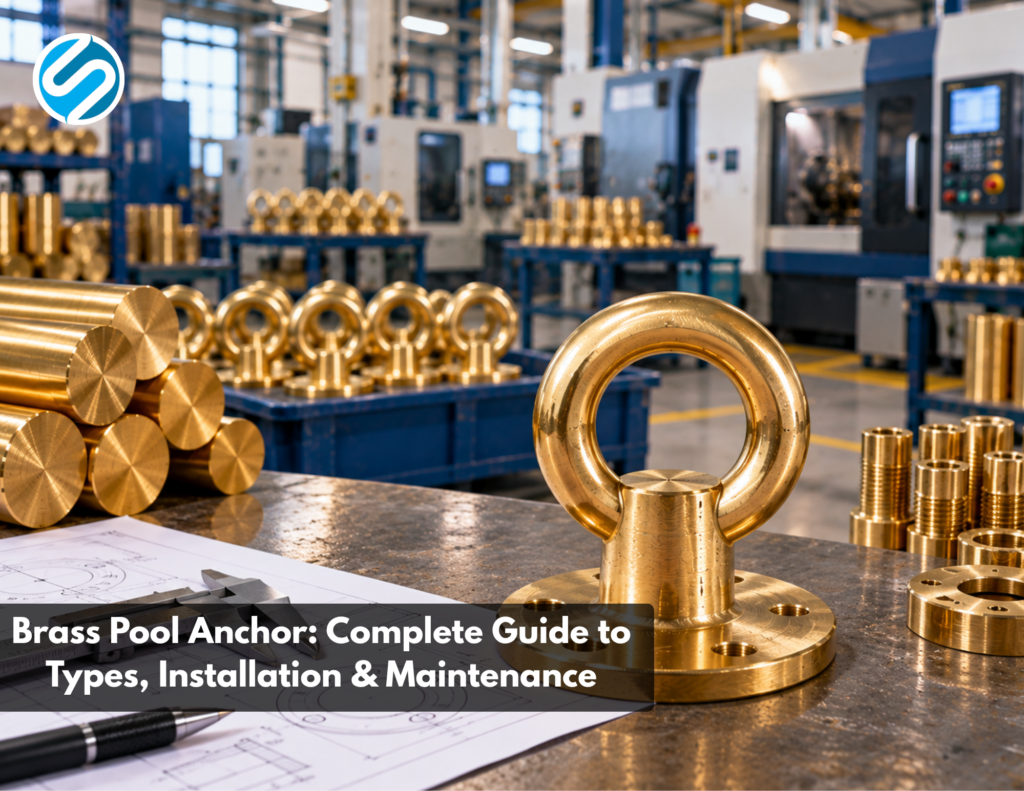
A brass pool anchor is a small but essential fitting used to secure pool covers, safety nets, and handrails around residential and commercial pools. Because brass resists rust and chemical exposure far better than plain steel, it stays the preferred choice for anchors set into concrete decks. This guide walks through the types, installation steps, manufacturing process, and upkeep needed to keep this hardware working reliably for years.
What Is a Brass Anchor for Pools?
This hardware is a threaded socket fixed into a pool deck or coping stone, giving cover straps, safety fencing, and ladder brackets a solid attachment point that will not loosen under repeated tension over time. Unlike plastic sockets, brass keeps its shape through years of repeated use and stays functional for decades without cracking. Many owners also fit a pool anchor cover over the socket to keep debris and standing water out when it is not actively in use.
Why Choose Brass Over Other Materials
Brass outperforms aluminum, plastic, and mild steel in wet, chlorinated conditions found around nearly every residential and commercial pool deck. It corrodes far more slowly than these alternatives, which cuts down on replacements and long-term repair costs for owners. Manufacturers producing Brass Fitting Parts engineer these components to tight tolerances so the threads stay smooth even after years of constant pool chemical exposure. This durability is exactly why a brass pool anchor remains the standard recommendation from most experienced pool installers.
Types of Brass Pool Anchors
Not every brass anchor serves the same purpose, since pool decks vary widely in material, layout, and the type of cover or fencing they need to support. Pool professionals typically pick from a handful of standard designs based on deck material, cover type, and expected structural load. Below are the five most common options installers reach for when planning a new or replacement installation:
- Socket-style anchors for poured concrete decks
- Swivel anchors for angled cover straps
- Flush-mount anchors for pavers and stone decking
- Heavy-duty anchors for safety fencing systems
- Threaded cap anchors with removable covers
How This Anchor Hardware Is Manufactured
Casting and Machining
Quality anchor hardware starts long before it ever reaches a pool deck for installation. Manufacturers cast or forge the raw brass alloy first, then machine each piece to precise thread dimensions on CNC equipment for consistency. This step matters because even a slight variation in thread pitch can cause an anchor to bind or strip during installation, which is why reputable suppliers hold tight tolerances across every production batch they run.
Alloy Selection and Testing
Alloy selection also plays a much bigger role in long-term durability than most buyers ever realize before purchasing. Marine-grade brass blends, which include small amounts of tin or aluminum alongside copper and zinc, resist saltwater and chlorine exposure noticeably better than standard brass alone. Before a batch ships, most manufacturers run salt-spray and pressure tests to confirm each piece meets corrosion and load standards required for pool use.
Core Components and Fittings
Brass Bushes and Fasteners
A full anchor system depends on several smaller parts working together correctly to stay watertight. Brass bushes, washers, and threaded caps all keep the socket sealed and secure over years of pool use. Suppliers who produce Brass Bushes often manufacture matching brass anchor fasteners as well, since both parts share similar machining requirements and material grades. A worn set of brass anchor fasteners is often the real cause of a socket that feels loose.
Washers and Seals
Washers deserve special mention since they are the part most often overlooked during a routine repair visit. A cracked or missing washer lets water seep past the seal and sit against the threads, which speeds up wear far faster than exposure to pool water alone. Keeping a small stock of spare washers and caps on hand makes routine fixes quick instead of turning into a full anchor replacement job.
Pool Cover Compatibility
Matching Anchor to Cover Type
Cover compatibility matters as much as the anchor itself when planning any new installation. A pool cover brass anchor needs to match the strap width, hook style, and spacing pattern of the safety cover it holds in place. Installing the wrong pool cover brass anchor size is one of the most common reasons cover straps pull loose within the first season of use.
Spacing for Different Pool Shapes
Anchor count and spacing also change significantly with pool shape and layout. Rectangular pools typically need anchors placed every few feet along straight edges, while curved or freeform pools require closer spacing around tight radii to keep the cover taut. Measuring twice against the actual cover, rather than a generic spacing chart, prevents gaps that let water or debris slip underneath. Keeping a spare pool cover brass anchor on hand also makes quick swaps easier during the season.
Choosing the Right Anchor for Your Deck
Anchor Style by Deck Material
Deck material changes which anchor style works best for a given installation. Poured concrete generally accepts standard socket anchors without issue, while paver and natural stone decking often needs a flush-mount design that spreads load across a wider surface area. Checking the deck material carefully before ordering hardware saves a second trip back to the supplier later on.
Load Ratings and Safety Covers
Load rating deserves equal attention, especially for safety covers rated to hold the weight of a person walking across them. Most manufacturers list a working load limit for each anchor style available, and pairing an undersized anchor with a heavy-duty safety cover is a common oversight. Matching anchor strength to cover type from the very start avoids this problem entirely down the road.
Installation Process
Step-by-Step Setup
Installation starts with marking anchor positions against the cover’s strap layout, spaced evenly around the entire pool edge. A masonry bit sized to the anchor sleeve drills each hole to the manufacturer’s specified depth, keeping every hole square to the surface. Dust and debris are cleared from each hole before the sleeve is set, since leftover debris weakens the anchor’s grip.
Setting this anchor correctly also means checking that the Brass Bushes and sleeve depth are seated properly before committing epoxy into the hole. A shallow or uneven hole remains the most common cause of early anchor failure across residential installations. The table below outlines the standard installation sequence most installers follow.
Stap | Task | Typical Tool |
1 | Mark anchor positions | Chalk line, tape measure |
2 | Drill sleeve holes | Masonry drill bit |
3 | Clear debris from holes | Shop vacuum |
4 | Set anchor sleeve | Anchor setting tool |
5 | Thread anchor and test | Anchor wrench |
Maintenance Checklist
Once the sleeve is set with epoxy or a mechanical expansion fitting, the anchor is threaded in and torque-checked to confirm proper fit. A quick pull test on each anchor before the cover goes on will catch any loose installs early, before they cause problems. Routine care keeps every fitting performing well long after the initial setup work is finished:
- Rinse anchor sockets after heavy pool chemical use
- Check for corrosion or thread wear each season
- Replace worn pool anchor cover caps promptly
- Re-torque anchors that feel loose underfoot
- Keep sockets free of dirt during winter closing
Cost and Long-Term Value
Upfront Price Comparison
Brass hardware costs more upfront than plastic or basic steel alternatives, often by a noticeable margin per anchor purchased. That price gap narrows quickly once replacement cycles are factored into the total cost of ownership. Plastic sockets can crack or degrade within a few seasons, while brass fittings routinely outlast the pool cover itself by a wide margin.
Long-Term Savings
Labor cost also favors doing the job once with durable hardware. Anchors that fail early mean re-drilling holes, patching old sockets, and paying for a second installation visit, which usually costs more than the price difference between brass and cheaper materials would have covered.
Common Mistakes to Avoid
Installation Mistakes
Skipping proper sleeve depth checks is the most common mistake pool owners make during a rushed installation. Overtightening during installation is another frequent error, since it can crack surrounding concrete rather than securing the brass anchor properly in place. A slow, checked installation always outperforms a rushed one and saves a costly callback later.
Maintenance and Spacing Mistakes
Left-in debris traps moisture against brass anchor fasteners, which speeds up wear even on corrosion-resistant metal over time. Uneven spacing is a third mistake worth flagging, since anchors set too far apart force the cover to sag between attachment points. Following the manufacturer’s spacing diagram, rather than eyeballing gaps by hand, keeps tension distributed evenly.
Adding Brass Decorative Touches
Matching Deck Hardware
Beyond function, hardware like this can also complement the overall look and finish of a pool deck. Homeowners upgrading their outdoor space sometimes pair anchor fittings with matching decorative caps for a consistent finish across railings, sockets, and other visible fixtures around the deck. This coordinated approach is common on higher-end concrete and paver decks where hardware is part of the overall design.
Impact on Resale Value
Matching finishes across a deck also helps at resale time, since buyers tend to notice consistent Brass Decorative Parts even if they cannot name why it looks intentional. A deck with mismatched caps, corroded steel fittings, and worn plastic sockets reads as neglected. Uniform brass hardware signals ongoing upkeep without a single word being said to a buyer.
Where to Source Quality Anchor Hardware
Sourcing hardware from an established manufacturer rather than a generic online listing makes a measurable difference in fit and longevity. Established suppliers test each batch for thread accuracy and corrosion resistance before it ships, cutting down on mismatched or undersized parts. Checking for documented load ratings before ordering prevents costly rework later.
Conclusion
A brass pool anchor combines durability with long-term value, making it the practical choice for pool covers, safety fencing, and deck hardware. Choosing the right type, installing it carefully, and keeping up with basic maintenance will keep every anchor point secure for years. With the right components and a bit of routine care, this fitting stays reliable season after season.
FAQs
Q1: How long does a brass pool anchor last?
With proper installation and regular maintenance, it typically lasts 15 to 25 years before needing replacement.
Q2: Can a brass pool anchor be installed in an existing concrete deck?
Yes, existing decks can be retrofitted using a masonry drill bit and the correct sleeve size.
Q3: What is the difference between a pool anchor cover and the anchor itself?
The anchor is the threaded socket in the deck, while the cover is the removable cap that protects it.