
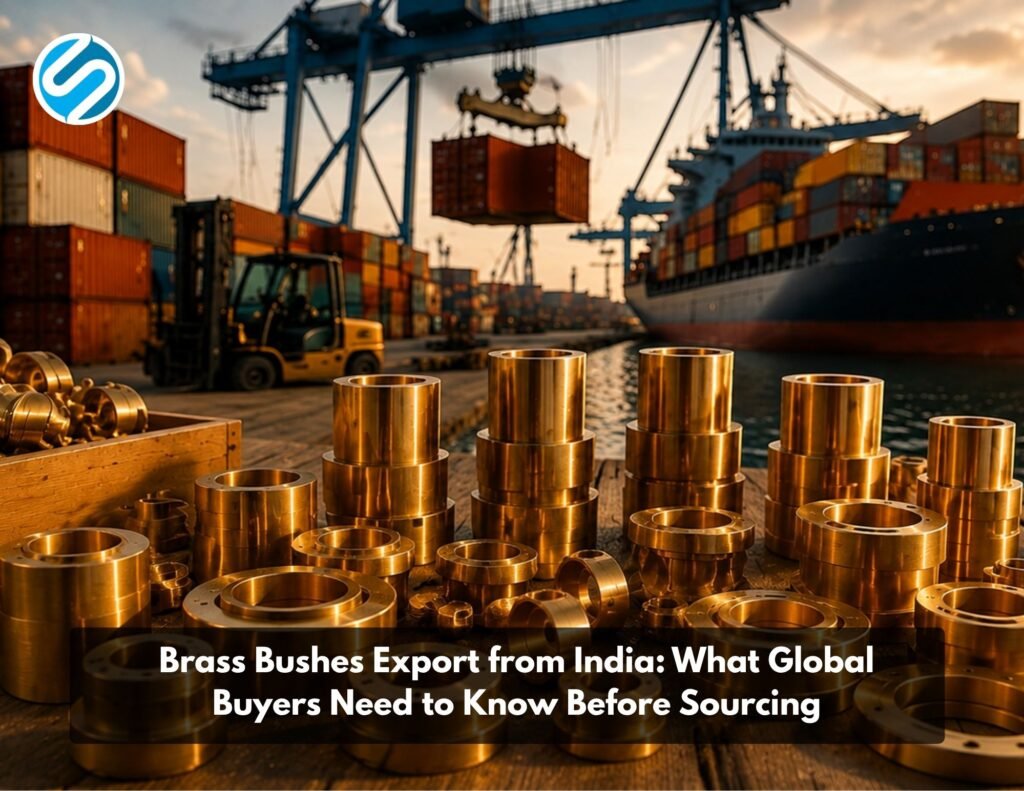
India has quietly become one of the world’s go-to sources for brass bushes export, and most of the credit goes to Jamnagar, Gujarat, where brass work has been a way of life for generations. If you’re a buyer scouting suppliers for the first time, the process can feel confusing between alloy grades, certifications, and paperwork. This guide walks through the practical side of sourcing brass bushes from India, what actually matters, and what tends to trip up first-time buyers.
Why Jamnagar Dominates Brass Bushes Export
Jamnagar produces a large share of the world’s brass components, and locals call it India’s brass city for good reason. Workshops here combine old-school craftsmanship with modern CNC machines, so buyers get precision without paying European prices. That combination is a big part of why brass bushes export from india keeps growing year after year.
Most manufacturers here handle casting, machining, and finishing under one roof. That means fewer handoffs and and fewer chances for something to go wrong between stages. Because raw material, casting, and machining all happen in the same industrial belt, turnaround times are often shorter too, compared to sourcing from suppliers spread across different regions. If you want the basics on why the material itself holds up so well, our piece on Benefits Of Industrial Brass Bushes is worth a look before you start comparing vendors.
A buyer we spoke with last year was sourcing bushes for a pump assembly line in Germany. He mentioned that switching to a Jamnagar-based supplier cut his part lead time by almost two weeks, simply because casting and finishing happened in the same facility.
Types of Brass Bushes Available for Export
Before you get into any real conversation about the export of brass bushes, it helps to know what’s actually on offer. Suppliers that export brass bushes internationally usually group products by alloy and finish.
Most catalogues include:
- Plain bushes for general machinery
- Flanged bushes for load-bearing use
- Threaded bushes for pipe and fitting assemblies
- Reducing bushes for size transitions
- Custom bushes machined to buyer drawings
- Self-lubricating bushes for high-friction parts
Each type needs its own tolerance and finishing approach. A good supplier will always ask for a drawing or a sample piece before quoting a price. For buyers who care about tight tolerances, and most industrial buyers do, it’s worth seeing how manufacturers approach Precision-Made Brass Parts before you finalise any order.
Quality Standards and Documentation Buyers Should Expect
Quality can’t be an afterthought once you’re exporting brass bushes at scale. Most credible Indian manufacturers follow ISO 9001 systems, run dimensional checks, and test material composition before anything ships. That’s really the line between a trustworthy brass bushes export partner and one that just says the right things on their website.
Paperwork matters just as much as the product itself. A dependable supplier hands over mill test certificates, HSN codes, and packing lists without you having to chase them down every time.
Getting the export of brass bushes through customs smoothly comes down to this kind of paperwork being in order from day one, not scrambled together after the shipment is already booked. Manufacturers who export brass bushes on a regular basis tend to know this better than most, because they’ve already paid the price for sloppy documentation once or twice.
What to Ask Before You Place a Brass Bushes Export Order
Before committing to any supplier, it’s worth asking these questions upfront:
- What brass alloy grade do you use, C36000, C37700, or something else?
- Can you share third-party test reports?
- What’s your minimum order quantity for export orders?
- How do you pack bushes for a long sea voyage?
- What’s your average lead time from order to dispatch?
- Do you charge extra for custom drawings or sample runs?
A supplier who answers these without hesitation is usually one worth working with long-term. That kind of detail is also what separates a serious, well-run exporter from one that’s just winging it order by order. If you want a broader look at how manufacturers handle sourcing and documentation together, our guide on Export Brass Hardware breaks the process down step by step.
What Affects Pricing and Shipping
Pricing for brass bushes export usually comes down to weight, alloy mix, and how much finishing work is involved, not just the number of pieces on the order. Buyers new to exporting brass bushes often underestimate how much polishing, plating, or threading adds to the final cost, sometimes by a fair margin.
Shipping terms are worth nailing down early too. Most Indian exporters quote on FOB or CIF terms, so it pays to be clear about who’s covering freight, insurance, and customs clearance before production even starts. Buyers who regularly export brass bushes will tell you that this one conversation saves the most headaches later on, whether it’s a trial order or a recurring brass bushes export shipment.
Mistakes First-Time Buyers Often Make
- Skipping sample approval before a full production run
- Leaving tolerances or alloy grade vague in the purchase order
- Ignoring minimum order quantity discussions until it’s too late to negotiate
- Picking the cheapest quote without checking certifications
- Not confirming HSN code and duty numbers upfront
- Assuming all brass alloys perform the same way
The Manufacturing Base Behind This Industry
A lot of what makes the export of brass bushes from India reliable traces back to a handful of manufacturing clusters that have been doing this for decades. Exporting brass bushes out of Jamnagar isn’t new, it’s been the region’s bread and butter since long before the word “export hub” became common.
That experience shows up in consistent quality and in the ability to scale production when an order turns out bigger than expected. To get a sense of that ecosystem, it’s worth looking at the Brass Manufacturers in Jamnagar guide, which covers the region’s manufacturing base and how it supports both small trial orders and large recurring contracts.
Conclusion
Sourcing brass bushes from India isn’t complicated once you know what to look for: the right alloy, proper certification, clear paperwork, and a manufacturer who’s upfront about lead times and cost. Jamnagar’s decades of manufacturing experience make brass bushes export from india one of the more dependable options out there for buyers worldwide. Take the time to ask the right questions before production starts, and most of the usual headaches never show up in the first place.
Frequently Asked Questions
Q1: What’s a realistic MOQ for sourcing brass bushes from India?
A: Most manufacturers go by weight, not piece count, usually starting around 100 to 500 kg. Smaller trial orders are often doable if you’re new.
Q2: Which brass alloy actually works best for export bushes?
A: C36000 and C37700 are the two you’ll hear most, mainly because they machine well and hold up under real industrial use.
Q3: How long does shipping actually take from India?
A: Sea freight runs 20 to 40 days depending on the port. Air freight can get an urgent order there in 5 to 7 days, for a lot more money.
Q4: Will manufacturers send samples before a bulk order?
A: Any supplier worth your time will, especially once custom sizes or tight tolerances are involved.
Q5: What should I actually check before picking a supplier?
A: ISO 9001 certification, mill test certificates, and material composition reports. If they hesitate on any of these, that’s a red flag.