
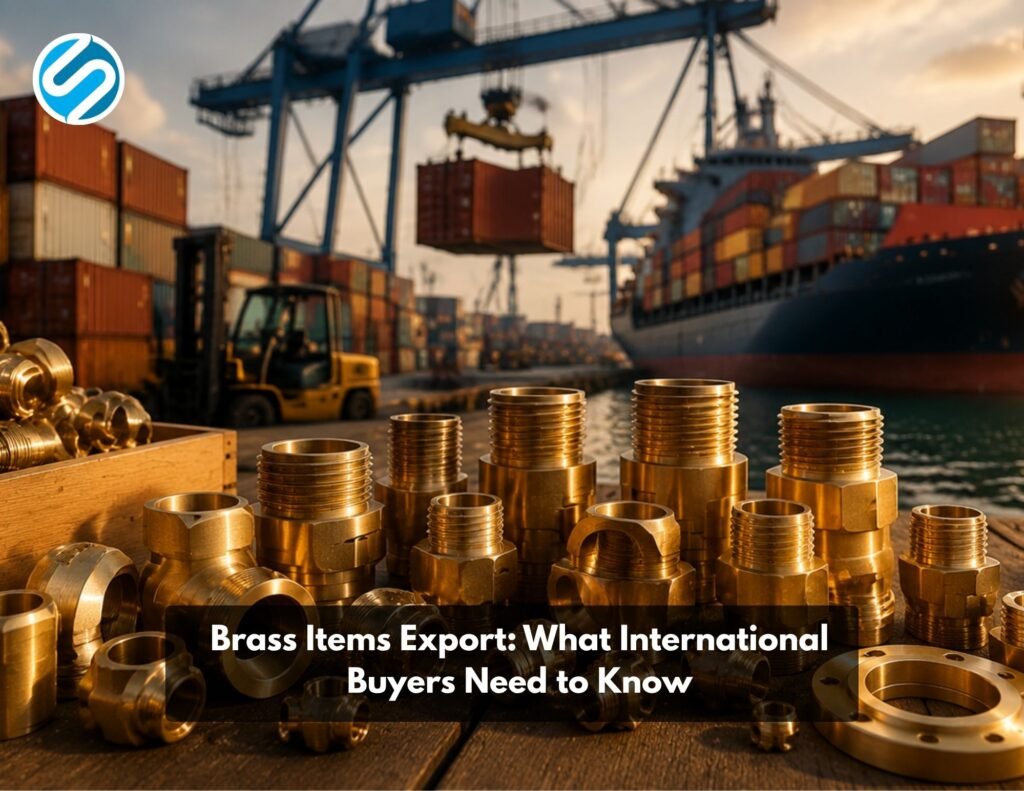
India has quietly become one of the most trusted sources for global buyers looking to source metal components at scale, and few categories illustrate this better than brass parts and fittings. Brass items export from India now reaches buyers across Europe, the Middle East, and North America every month, driven by competitive pricing, mature manufacturing infrastructure, and increasingly strict quality expectations from overseas markets.
If you are a procurement manager or an import business owner evaluating a new supplier, understanding what actually goes into a dependable shipment can save you from delays, rejected consignments, and quality disputes down the line. Suraj Brass Industries manufactures a wide range of brass components for both domestic and export orders, and this guide breaks down what matters most, in plain, practical language you can actually use.
Why India Leads in Brass Items Export
Global manufacturing hubs like Jamnagar have spent decades refining casting, forging, and machining processes, which is why so many procurement teams now default to brass items export from India when they need consistent quality at competitive pricing. Skilled labor Existing supply chains and mature quality systems all help.
Buyers also appreciate that the export of brass items from established Indian manufacturers usually comes with proper documentation, mill certificates, and traceability. Not every supplier offers this level of paperwork discipline.
What International Buyers Should Look For
Not every brass exporter is the same, so before signing a purchase order, it helps to know exactly what separates a dependable partner from a risky one.
Material Quality and Certification
The composition of the alloy directly affects strength, corrosion resistance, and machinability. Ask your supplier for material test certificates (MTC) and, where relevant, RoHS or REACH compliance documents, especially if the parts are headed to the EU.In general, a supplier unwilling to provide this documentation upfront is a red flag, not a formality to be ignored.
Manufacturing Capability
A manufacturer that performs casting, forging, CNC machining and finishing in-house usually offers better lead times and tighter tolerances than one that outsources each stage to third parties. In-house capability also means fewer handoffs, which usually translates into fewer quality slips.
Packaging and Logistics
Moisture-resistant packaging, correct HS code labeling, and container-ready palletizing prevent damage and customs delays. This is one of the most overlooked parts of the export of brass items, yet it directly affects whether a shipment clears customs smoothly on the first attempt.
How to Export Brass Items from India
If you’re an Indian manufacturer wondering how to export brass items to international buyers for the first time, the process usually follows a fairly predictable path:
- Get your Import Export Code (IEC) from DGFT before anything else moves forward
- Nail down the correct HS code for your product category. This trips up more first-timers than you’d think
- Send a quotation with the Incoterms spelled out clearly, FOB, CIF, whichever applies to your deal
- If the buyer wants third-party inspection, arrange it early instead of scrambling later
Buyers based overseas rarely need to know every regulatory detail, but a basic understanding of how to export brass items helps you ask the right questions and spot red flags early, especially when comparing quotes from more than one supplier.
Common Types of Brass Export Items
Indian manufacturers ship a wide range of brass export items every month, and buyers often source more than one category from the same supplier to save on logistics costs.
- Plumbing and bathroom fittings, still the highest-volume category for most exporters
- Electrical and earthing components
- Valves, elbows, and pipe fittings
- Fasteners, inserts, and nuts
- Automotive and industrial parts
- Decorative and hardware pieces, lower volume but steady, repeat demand
Whatever the category, consistent tolerances and finish quality across a full order of brass export items build trust faster than a low price ever will.
Every batch that leaves our facility goes through the same quality assurance process, whichever of these categories the order falls under.
Practical Tips for International Buyers
A few practical habits separate buyers who build long-term supplier relationships from those who deal with recurring quality issues.
- Ask for a pre-shipment sample before confirming the bulk order, always
- Push for batch-wise mill test certificates rather than one generic document covering the whole lot
- Get the Incoterms in writing so shipping cost disputes don’t come up later
- Leave yourself a buffer of a week or two for customs and inspection. Delays happen more often than not
For buyers who want to see how this looks in practice, our case study on Reliable Brass Supply for advanced German industries walks through how consistent quality and clear communication kept a long-term export relationship running smoothly.
Why Choose Suraj Brass Industries for Brass Export
Suraj Brass Industries has supported brass items export from India for buyers across multiple continents, ranging from single-container trial orders to long-term annual contracts. Decades of casting, forging, and precision machining experience go into every order, whether small or large.
Our quality assurance process covers raw material testing, in-process checks, and final inspection before dispatch, so international buyers receive consistent quality on every shipment. For decades, the export of brass items from our facility has meant treating every consignment, big or small, with the same level of scrutiny.
Whether your team already manages export logistics in-house or you’re considering options for the first time, working with a manufacturer that manages the entire production chain minimizes risk and cuts lead times.
Conclusion
Sourcing brass parts internationally doesn’t have to be complicated once you know what to check for. The difference between a smooth shipment and a stressful one is reliable certification, in-house manufacturing capability, proper packaging and clear documentation. Whether you’re placing your first order or your fiftieth, a supplier that treats quality and communication as non-negotiable saves you far more money and time than a slightly lower quote ever could. For most buyers, brass items export stops feeling risky the moment they find a manufacturer willing to explain the process instead of just quoting a price. Take the time to verify that process before you commit, because that’s when brass items export starts to feel like routine business instead of a gamble.
FAQs
1. What is the minimum order quantity for brass parts from India?
It varies by supplier and product type, but most manufacturers can accommodate both trial orders and large recurring shipments.
2. Which certifications should I ask for before placing an order?
Material test certificates, RoHS/REACH compliance (for EU buyers), and a certificate of origin are the most commonly requested documents.
3. How long does shipping usually take?
Ocean freight typically takes two to six weeks depending on the destination port, while air freight is faster but significantly costlier.
4. Can I get customized brass components made to my drawings?
Yes, most established Indian manufacturers offer custom tooling and machining based on buyer specifications and sample approval.
5. What payment terms are common for first-time international orders?
A mix of advance payment and balance against shipping documents (or a Letter of Credit) is standard for new buyer-supplier relationships.