
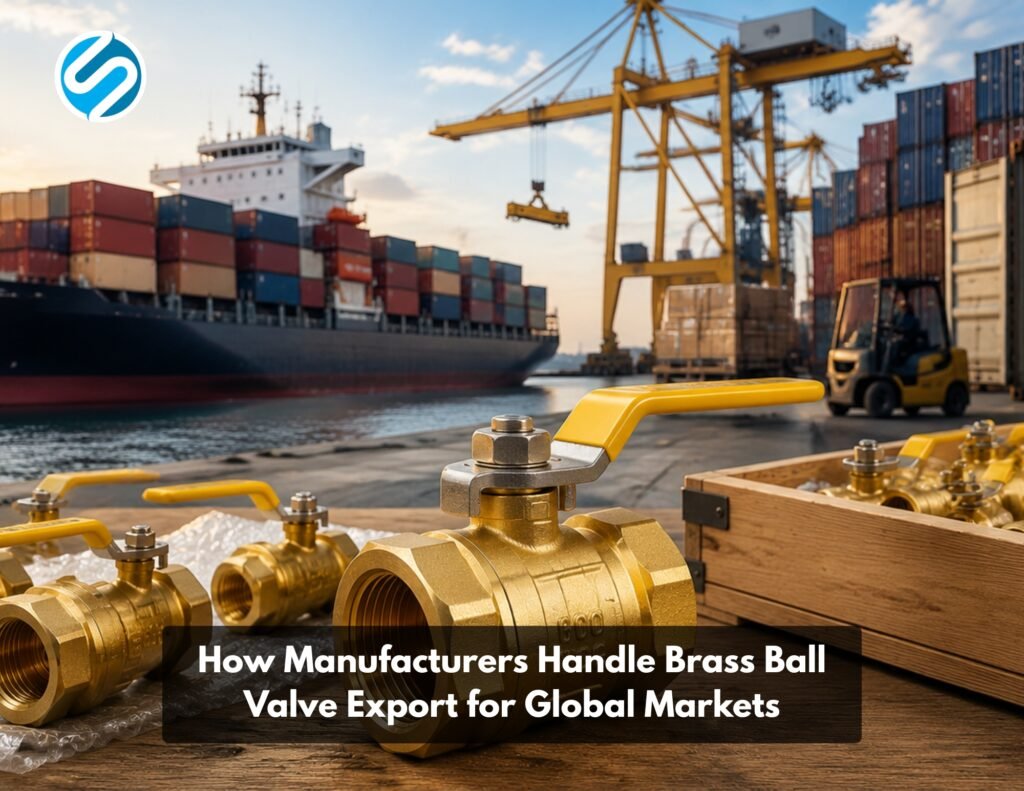
Brass ball valve export has become one of the fastest-growing segments in India’s precision manufacturing world, and it did not happen by accident. Buyers who once defaulted to Chinese suppliers are now splitting orders and asking harder questions before they commit. Factories that answer with real documentation, not vague assurances, are the ones picking up repeat business.
Why Global Buyers Are Turning to Indian Manufacturers
Talk to a procurement manager in the US or the Gulf and there’s a decent chance they’ve recently added a brass ball valve manufacturer based in India to their approved vendor list. Part of it is price. A bigger part is that Indian units have upgraded their machining floors, so orders that used to take eight weeks now clear CNC lines faster, with tighter tolerances than a decade ago.
A factory that makes valves well usually knows its way around Brass Plumbing Fittings too, since the machining and finishing steps overlap. That means fewer vendors to manage and one less relationship to babysit across time zones.
The Brass Ball Valve Export Journey: From Factory to Port
Every brass ball valve export from india order follows roughly the same arc, though details shift with order size. Raw brass comes in as billet or rod, gets cast or forged into rough shapes, then heads to CNC machines for the precision work. Assembly and pressure testing come after that, not before, which trips up buyers who assume testing happens somewhere in the middle.
It’s worth looking at how a Brass Valve Manufacturer in India sets up its production floor around repeat export contracts rather than one-off jobs.
How Brass Ball Valve Export Works, Step by Step
Once you’ve seen the sequence a few times, the timeline stops feeling mysterious:
- Raw material sourcing and alloy verification before anything gets cut
- CNC turning and machining to the buyer’s exact drawing
- Pressure testing and leak checks on every single batch, not just samples
- Surface finishing, whether that’s nickel plating, chrome, or a plain polish
- A third-party inspection before boxes get sealed
Skip any one of these and something usually goes wrong three weeks later, right when it’s hardest to fix.
Quality Standards That Actually Matter to Buyers
Certification alone doesn’t win contracts, but the lack of it kills them fast. Most factories worth working with hold ISO 9001, and they pressure-test and dimension-check every valve before it leaves the plant rather than pulling a random handful off the line.
Material choices have shifted too. Brass in Modern Manufacturing has moved toward lead-free alloys, partly because regulations demand it and partly because buyers now expect it as standard. Tellingly, brass ball valves export orders get inspected batch by batch these days, not through the occasional spot check that used to pass for quality control.
Choosing a Manufacturer Without Getting Burned
Plenty of factories say they export. Fewer can actually prove it under pressure. Before signing anything with a brass ball valve manufacturer, it’s worth running through a short checklist:
- ISO and RoHS certificates that you can actually verify, not just a PDF
- Willingness to send samples before asking for a bulk deposit
- Someone who answers emails in clear English within a reasonable window
- Testing done in-house, not shipped out to a third lab every time
The factories that pass all six tend to keep clients for years. The ones that dodge two or three questions usually lose them after the first shipment.
The Rough Edges Nobody Puts in the Brochure
None of this has gotten easier across the board. Brass ball valve export from india still runs into currency swings that eat margins, freight costs that jump without warning, and customs paperwork that occasionally sits on someone’s desk for an extra week. Even sourcing decisions tied to Brass in Modern Manufacturing, like switching to a leaner alloy mix, can quietly shift costs in ways buyers don’t see until the invoice lands.
Chinese and Turkish suppliers haven’t gone anywhere, and they still compete hard on price. What’s kept Indian brass ball valves export volumes climbing anyway isn’t a lower quote, it’s that buyers value a supplier who fixes a problem instead of going quiet.
A Few Things Worth Doing Before You Order
Buyers who’ve done this a few times tend to develop the same short list of habits:
- Ask for a pre-shipment inspection report every time, no exceptions
- Nail down NPT or BSP thread standards before drawings go final
- Request material test certificates for each production batch
- Run a small trial order first, even if it feels slow
Once you’ve been through it once, how brass ball valve export works stops feeling like a black box. Most of the friction sits in the first order.
Where This Leaves Buyers
Brass ball valve export from india isn’t slowing down. If anything, it’s accelerating as procurement teams decide one supplier in China isn’t a strategy, just a risk waiting to happen. A dependable brass ball valve manufacturer that backs claims with paperwork and consistent machining keeps winning repeat orders long after a cheaper, less transparent competitor loses its first big client.
If you’re new to sourcing here, the fastest way to get comfortable with how brass ball valve export works is to start small and judge a supplier by how they handle a problem, not how smooth the sales pitch sounds. Demand for brass ball valves export keeps climbing, and the manufacturers who treat transparency as normal are the ones buyers keep coming back to.
Conclusion
Sourcing brass valves from a country halfway around the world was never going to be simple, and it still isn’t. What’s changed is how much of the risk buyers can strip out before the first order ever ships. Certificates, sample runs, a supplier who answers the phone on a bad day, none of it is glamorous, but it’s the difference between one shipment and a five-year relationship. The manufacturers who get that tend to stop competing on price entirely, because by then, price stopped being the question buyers were asking.
FAQs
Q1. How long does a first shipment take?
Usually three to five weeks after the design gets confirmed, sometimes longer if you’re asking for a custom alloy mix.
Q2. What should I check before sending a deposit?
ISO 9001 at minimum, plus a sample you’ve actually tested yourself, not just a spec sheet the factory emailed over.
Q3. Is lead-free brass required or optional?
Practically required now for anything touching drinking water in the US or EU, so most factories just build it in as standard.
Q4. Why do freight quotes change so often?
Container space and fuel costs shift week to week, and a quote that looked solid in January can be stale by March.
Q5. What mistake do first-time buyers make most?
Skipping the trial order and jumping straight into a bulk container because the price on paper looked too good to pass up.