
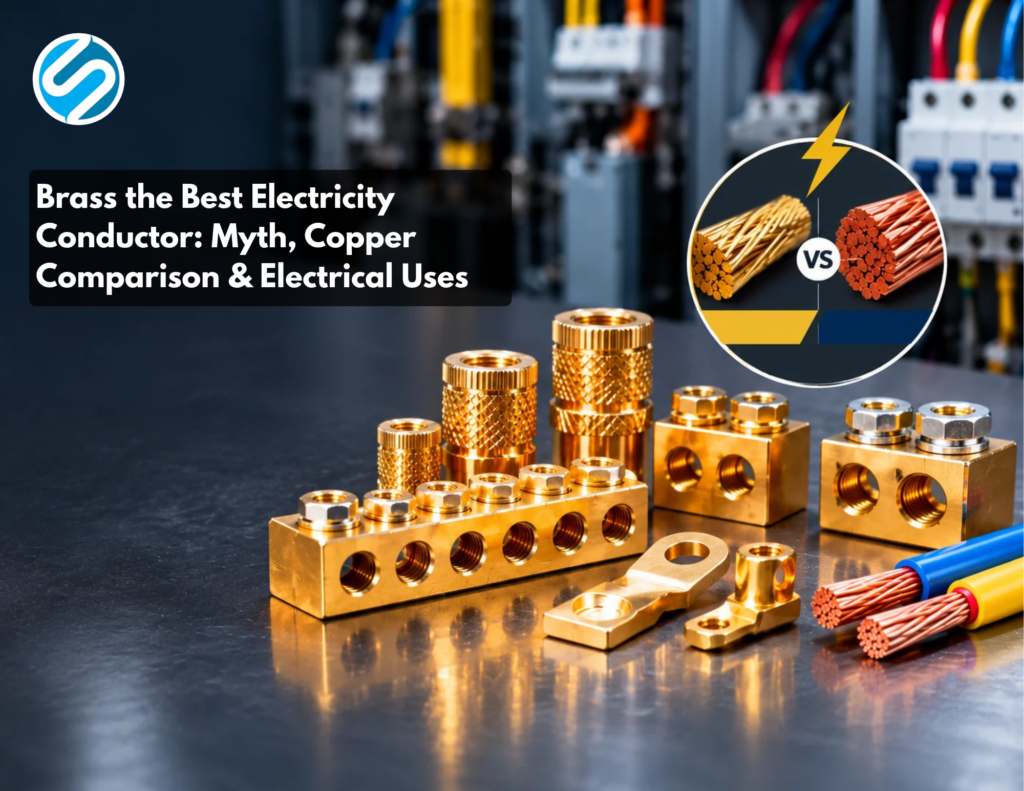
Open any switchboard in an Indian home and you’ll spot that familiar golden shine on the terminals, screws and plug pins. That’s brass. It shows up in so many electrical parts that a lot of people simply assume brass the best electricity conductor out there.
It’s a fair guess, and there’s good logic behind it. Brass gives electrical parts what they need most: steady conductivity, a strong grip and a long working life.
When people ask which metal is best conductor of electricity, silver and copper usually get the first mention. Brass sits a few places lower on that list, yet it’s the metal most manufacturers actually trust for components. Here’s why.
Why People Call Brass the Best Electricity Conductor
Brass is everywhere in electrical fittings: terminals, connectors, neutral links and earthing parts. When you see one metal that often, you start to believe it must be the top performer.
But nobody picks brass for conductivity alone. A small electrical part has a tough job. It has to carry current, hold a screw tight, stay free of rust and survive thousands of plug-ins over the years. Very few metals manage all of that at a sensible price. Brass does.
So the myth gets the reason wrong, not the result. If you judge the whole part and not just one number, calling brass the best electricity conductor for components starts to make sense.
What Conducts Electricity Best, and Where Brass Fits
On pure conductivity, the best conductor for electricity is silver, with copper right behind it. Engineers compare metals on the IACS scale, where pure copper is set at 100%.
A rough comparison looks like this:
- Silver: about 105% IACS, the best conductor for electricity, but far too costly for daily use
- Copper: 100% IACS, perfect for long wires, cables and motor windings
- Gold: around 70% IACS, mostly a thin plating on special connectors
- Aluminium: about 61% IACS, common in overhead power lines
- Brass: roughly 25–28% IACS, plenty for the short current path inside a component
- Stainless steel: only 2–3% IACS, hardly ever used to carry current
Even the metals known for superior electrical conductivity have their weak spots. Silver tarnishes and costs a fortune. Aluminium is soft and expands a lot when it gets warm. Brass doesn’t have those headaches.
And inside a terminal or plug pin, current only travels a few millimetres. Over that distance, brass does the job comfortably. So if you ask what conducts electricity best inside a switchboard part, brass is often the practical answer.
Brass Is Conductor or Insulator?
Students ask this a lot, and so do first-time buyers. The search “brass is conductor or insulator” is surprisingly common, probably because brass looks so different from reddish copper.
Brass is a conductor. It’s made from copper and zinc, and both metals have free electrons that move current along. Insulators are things like rubber, PVC and glass. They stop current, which is why you see them wrapped around brass and copper parts, never inside them.
So if that doubt ever comes up in class or at the shop counter, the answer is simple: conductor.
Is Brass a Good Conductor of Electricity?
For the work it’s meant to do, yes. People who ask “is brass a good conductor of electricity” are usually thinking about wires. Brass isn’t a wire metal. It’s a component metal, and in components it carries current steadily and keeps a clean contact surface for years.
The grade matters too. The electrical properties of brass shift with the copper content. Higher-copper grades conduct better, so they’re picked for parts that carry more current.
That’s why designers choose the grade first, then the shape. Get that right and brass performs beautifully in terminals, pins, sockets and connectors.
Brass vs Copper: Why Brass Wins for Components
Copper is brilliant for wiring. No argument there. But the brass vs copper question changes completely when you move from wires to small machined parts.
| Property | Copper | Brass |
| Conductivity | 100% IACS | About 25–28% IACS |
| Strength | Soft, bends easily | Strong and rigid |
| Machining | Sticky, slow to machine | Cuts cleanly and fast |
| Corrosion | Tarnishes quickly | Holds up well |
| Thread holding | Can strip or deform | Holds threads firmly |
| Cost per finished part | Higher | Lower |
Picture a terminal screw in a distribution board. An electrician tightens it today, loosens it next year and tightens it again during a repair. A copper screw would slowly soften and lose its bite. A brass one stays firm, and the connection stays safe.
That’s really what it comes down to for components. Brass the best electricity conductor? On paper, no. The best metal for the part? Very often, yes.
Uses of Brass in Electrical Components
Walk through any electrical market and you’ll see brass in almost every product. Plenty of engineers would happily call brass the best electricity conductor for fittings, and their reasons are practical:
- Pins, threads and holes machine accurately, batch after batch
- It stays strong through repeated plugging and screw tightening
- It resists corrosion in humid, coastal and monsoon conditions
- It’s non-sparking, which helps in sensitive industrial areas
- It takes nickel, tin and silver plating well for longer contact life
- It costs less per finished part than machining pure copper
- It’s fully recyclable without losing quality
You’ll find brass in plug pins, socket contacts, terminal blocks, neutral links, earthing accessories, cable glands, PCB terminals and meter parts. At Suraj Brass Industries, we make brass electrical components like these for Indian brands and export buyers, turned to your drawing and size.
Why Jamnagar Brass Parts Are Trusted
Jamnagar is called the brass city of India for good reason. The town has generations of skilled machinists, modern CNC shops and steady access to good raw material.
For buyers, that means consistent quality, custom sizes and fair pricing in one place. One tip from our side: send your drawing, the brass grade and the plating type in your first enquiry. Sampling moves faster, and you’re far more likely to get the right part on the first try.
We often meet buyers who walk in thinking every part needs copper. Once they weigh strength, life and cost together, many end up seeing brass the best electricity conductor choice for their terminals. A lot of that comes from the mix itself. Brass is an alloy of copper and zinc. Small changes in that ratio, or a little added lead or tin, change how the metal machines, wears and conducts.
Conclusion
The idea that brass beats every other metal at conducting electricity isn’t quite right, but it isn’t far off the mark for components either. Silver and copper lead on raw numbers. Brass, though, conducts reliably over short paths and adds strength, corrosion resistance and easy machining that copper can’t match at the same cost. For terminals, pins, sockets and connectors, many experts consider brass the best electricity conductor for the job as a whole. Choose the right grade from an experienced manufacturer and your parts will keep working safely for years.
FAQs
1. Why do people call brass the best electricity conductor for components?
Brass mixes good conductivity with strength, corrosion resistance and easy machining. That balance makes it ideal for terminals, pins and connectors.
2. What conducts electricity best among metals?
Silver is the best conductor for electricity, followed by copper, gold and aluminium. Brass is a reliable conductor for short current paths.
3. Brass is conductor or insulator?
Brass is a conductor. It’s made of copper and zinc, so current flows through it easily.
4. Is brass a good conductor of electricity for plug pins and sockets?
Yes. It carries current reliably over short distances and keeps its shape through years of use.
5. Which brass grade is best for electrical parts?
Free-cutting brass is common for turned parts, while higher-copper grades suit parts that carry more current. Your manufacturer can suggest the right grade for your design.