
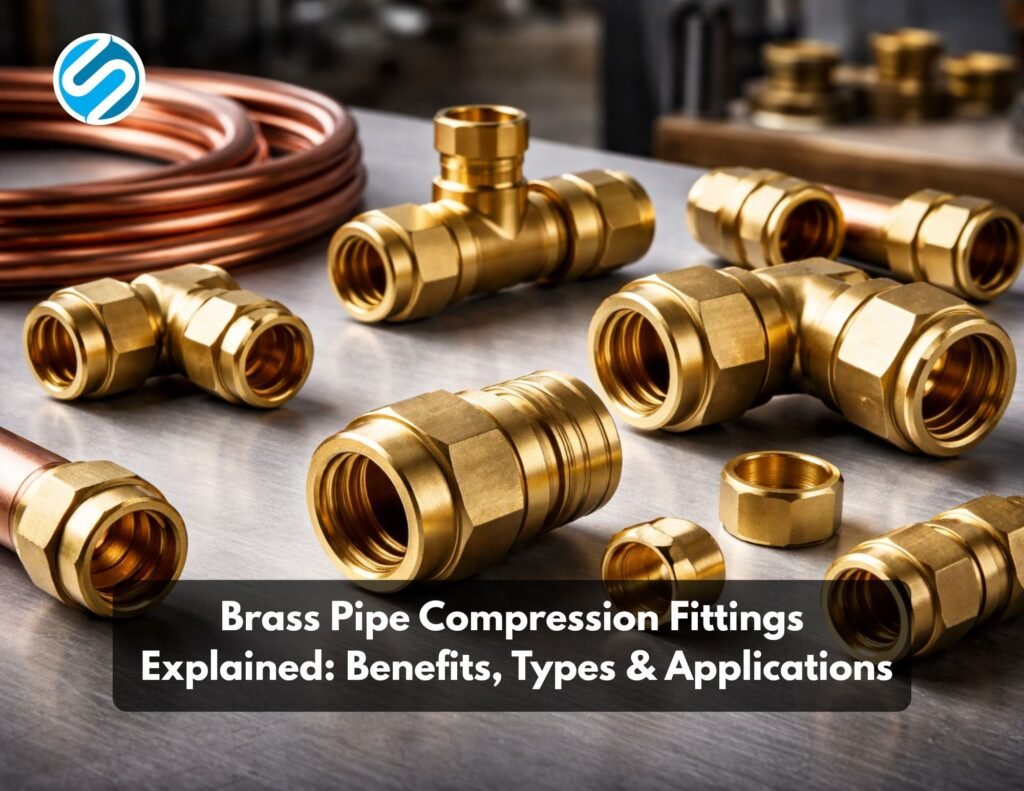
Introduction to Brass Pipe Compression Fittings
Brass pipe compression fittings have become integral to everyday plumbing in the home and in the industry for the construction of strong, permanent, and leakproof pipe fittings. The fittings are designed for simple construction and offer long-term durability and performance. These fittings are durable and can be utilized in both home and industrial plumbing systems. They also eliminate the need for complicated welding or soldering construction techniques.
The industry as a whole has placed an emphasis on reliability and efficiency, which has consequently raised the demand for high-quality fittings. Brass Fitting Parts allows one to understand the individual roles and functions of various brass fittings.
What is Compression Fittings and How They Work
Understanding brass pipe compression fittings necessitates an understanding of what is compression fittings. Compression fittings are used to join two pipes or tubes by compressing a ferrule over the pipe, which creates a permanent seal.
Typically, a compression fitting contains three primary elements:
- Compression nut
- Ferrule (ring)
- Fitting body
The nut can be retightened if need be, which allows the ferrule to be further compressed over the pipe, and an even tighter seal can be created. The connector compression mechanism creates stability by and prevents leaks, which can be caused by internal pressure within the pipe. These fittings are ideal for systems that will need to be taken apart and serviced regularly.
Key Components of Compression Fittings
Brass pipe fitting helps with pipe systems’ performance, as they help with flow, corrosion resistance, and corrosion resistance with their composition, strength, and machinability.
Benefits of Brass Pipe Compression Fittings
The list of pros when using brass pipe compression fittings broadens with each use. For example, they withstand corrosion and are reliable and long-lasting. Many fields incorporate brass compression fittings and for great reason, as their performance during harsh conditions remains uncompromised.
Another reason why industries prefer brass compression fittings is their durability and long service life. These fittings can withstand high pressure and temperature conditions without compromising performance.
Key Advantages
- Lasting and corrosion-resistant
- Installation is simple and does not require specialized equipment
- Sealing that is reliable, firm, and leak-proof
Additionally, they have a lower overall cost when maintenance and repair work are taken into consideration, as the fittings are reusable.
Types of Brass Pipe Compression Fittings
Many varieties available for compression fittings of brass pipe are different piping needs. While each has a different goal, the fittings are all made to ensure safe connections.
Common Types
- Joiner for Straight Pipe Connectors
- Elbows for Reroutes
- Tees for Split Connections
Brass compression coupling is preferred for pipeline extensions and for connecting two pipe sections. They are designed to provide an even flow and consistent pressure throughout the system.
Applications of Brass Pipe Compression Fittings
Compression fittings of brass pipe can be used for many things. These areas can be both residential and industrial.
In most plumbing systems, you will find fittings used for both supply and drain systems. They are also critically used for systems that distribute gas, where safety and leak protection are primary.
Industry Applications
- Residential plumbing systems
- Gas and fluid piping
- Industrial machinery and equipment
Precision Brass Components are some high-grade industrial solutions that also incorporate modern technology.
Brass Pipe Compression Fittings vs Other Fittings
For many types of fittings, brass pipe compression fittings are usually better performance-wise and more user-friendly. They also do not need sealing tapes, compounds, or any other sealing materials, unlike many threaded fittings.
Brass compression fittings are some of the most user-friendly fittings for the majority of installation situations. Because of the tight fit that these compression fittings provide, they are very good for situations that will have a lot of pressure or movement.
Installation Guide for Brass Pipe Compression Fittings
You will not need to have any extremely advanced skills for you to be able to complete the installation of these fittings. The most important thing is that you do the installation properly, and you will find that it performs at its very best.
Starting with the compression nut and ferrule on the pipe, insert the pipe into the fitting body, and tighten the nut (do not hold back on this). When this is done, the connector compression mechanism will seal the pipe for you.
Be careful not to overtighten, this can either damage the fitting or cause it to not work properly.
Choosing the Right Brass Pipe Compression Fittings
It is one of the most important things to do to secure the efficiency and the lifespan of your system. This includes ensuring the correct size of the pipe, pressure, and type of application.
The same goes for fittings made from high-quality materials. Brass Piping and Fittings can help you explore your options for Piping and Fittings, and help you understand complete systems.
Also, the use of brass compression coupling is crucial for the extension and maintenance of pipelines.
To sum up, one of the most crucial parts of modern piping systems are the brass pipe compression fittings. They are preferred in many industries due to the ease of installation, durability, and leak-proof functionality.
Conclusion
Knowing what is compression fittings and the right type to use is crucial for the long-term efficiency and the safety of the system. Ensuring the use of fittings made from high-quality materials can provide the businesses and the homeowners, the piping system that is reliable and economical.