
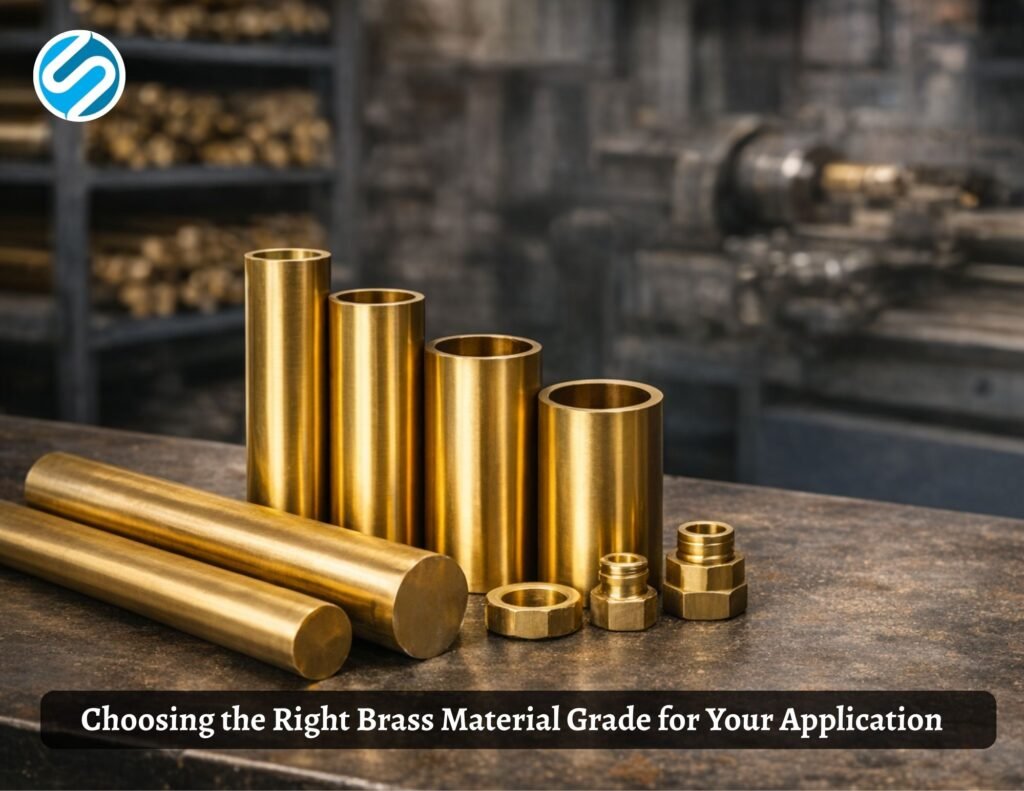
One of the most significant aspects of precision brass manufacturer in jamnagar is choosing the right brass material. Suraj Brass Industries is aware that although the manufacturing of brass may be simple, not every brass alloy operates the same way in every environment. Brass can be distinguished by its corrosion resistance, machinability, and overall durability. However, among the many alloy grades available, not all may be suited for the task at hand.
Each brass alloy has a different set of characteristics that respond to different industrial requirements, such as high-speed machining, electro-conductivity, resistance to seawater corrosion, and surface finishing. Each of these criteria is important in guiding the selection of the alloy to support the overall objectives of the brass component with respect to performance and reliability over an extended period.
This guide will look into the different needs of different brass grades, the composition of brass, the different brass machining requirements, and the various standards brass is specified to.
Why Brass Material Grade Selection Matters
Brass alloys respond differently to various conditions. The grade selected will determine the performance of the component when subjected to various conditions such as heat, pressure, moisture, and electrical load. Selecting the inappropriate grade of brass will lead to high rates of wear, corrosion, and overall machining inefficiency.
The right selection of brass material will ensure:
- Longer product life
- Greater accuracy in machining
- Uniform appearance in finishing
- Improved performance in tough conditions
For the automotive, electrical, plumbing, marine, and precision engineering industries, selecting the right grade of brass is key to functionality and economics.
Understanding Brass Material Composition Across Grades
The performance of brass starts from its chemistry. The brass material composition is mainly based on the different percentages of copper and zinc, although other alloying elements may be included depending on its use.
Some of the key compositional changes are as follows:
- Higher copper content → better corrosion resistance and conductivity
- Higher zinc content → increased strength and toughness
- Lead addition → improved machinability for turned parts
- Tin addition → enhanced resistance in marine conditions
Because of these different combinations, different brass grades have varying mechanical strengths, workability and durability. This is very critical in the manufacture of high-precision parts such as brass turned part for engineering assemblies.
Types of Brass Material Used in Industrial Applications
There are several different and commonly used types of brass material and each is designed for a specific purpose. The right selection ensures the right compromise among strength, corrosion resistance, and ease of manufacture.
Free-Cutting Brass (C360)
This is one of the most popular selections for precision machining. This grade is built for optimal speed for CNC turning along with drilling.
Best suited for:
- Turned components
- Inserts and connectors
- Fasteners and threaded parts
Its structure lends itself to efficient production while providing consistent quality of brass.
Cartridge Brass (C260)
The brass C260 is known for excellent ductility and formability, making it perfect for bending, stamping, or deep drawing applications.
Common uses include:
- Decorative hardware
- Industrial sheets
- Formed mechanical components
It provides a seamless surface with excellent finishing.
Naval Brass
Naval brass includes the alloying agent tin, making it highly resistant to corrosion due to saltwater.
Ideal for:
- Marine fittings
- Coastal industrial parts
- Heavy-duty environmental exposure
This type of brass material is often selected for rough use.
High-Copper Brass Grades
Grades with high copper content have an increased level of conductivity and corrosion resistance. This makes these grades highly suitable for electrical systems and brass precision parts.
Common applications:
- Electrical terminals
- Heat transfer parts
- Sensitive electronic components
These grades satisfy the brass material specifications for the electrical industry with the most stringent requirements.
Matching Brass Material Grade to Your Application
Each end-use application brings its own set of critical requirements to determine the. best brass grade. A material that performs well in plumbing applications may not be ideal in the aerospace or electrical environments.
Electrical Applications
Electrical systems require brass that provides:
- Reliable conductivity
- Strong contact stability
- Precision manufacturing consistency
Because of this, high-copper brass is often recommended for connectors and terminals.
Plumbing and Sanitation
Brass plumbing parts demand corrosion resistance, as well as the ability to seal smoothly. Commonly selected brass materials include:
- Valves
- Pipe fittings
- Water system connectors
Brass of consistent quality is critical in ensuring operational safety for the components to be leak-free.
Automotive and Mechanical Components
The components of cars require the use of wear-resistant alloys that can withstand the different temperatures and the amount of vibration that occur during the operation of the device.
When machining accuracy and durability are priorities, alloys of grade C360 are often chosen.
Marine and Coastal Environments
Exposure to saltwater requires the use of brass grades that have greater resistance to corrosion, for example, naval brass, to ensure long-lasting reliability.
Importance of Brass Finishing for Performance
The quality of the surface and its appearance are influenced greatly by finishing technique. Different grades respond differently to coatings and polishing.
Common brass finishing options include:
- Polishing for decorative hardware
- Nickel plating for enhanced durability
- Chrome coating for wear resistance
- Matte finishing for industrial aesthetics
- Protective coatings for tarnish prevention
The quality and longevity of brass are intertwined with the quality of its finishing.
Ensuring Brass Quality Through Standards and Inspection
An industrial buyer should evaluate and certify brass quality before closing any grade.
Key checks include:
- Alloy composition verification
- Dimensional tolerance accuracy
- Surface smoothness evaluation
- Corrosion resistance testing
- Strength and hardness inspection
Quality brass components perform well in various conditions.
Brass Manufacturing and Specification Consistency
Consistent brass manufacturing guarantees that each component is up to industry and application standards. Manufacturers need to exercise control over:
- Raw material selection
- Alloy mixing precision
- Production tolerances
- Finishing consistency
- Certification and quality inspection
For securing repeat orders, export supplying, and meeting the needs of industrial OEMs, meeting a defined brass material specification requirement will meet the expectations.
Conclusion
Finding the right brass material grade requires you to consider more than just the metal composition, finishing, industry standards, and specification requirements that need to be defined for the application.
With the right understanding of brass material composition, types of brass material and good production quality, industries can increase smart sourcing.
Selecting the right grade is important for electrical connectors, marine fittings, precision-turned components, and decorative hardware to ensure sustained performance and reliability.
Suraj Brass Industries keeps providing global industrial buyers with premium industrial metal components, acknowledging their machining accuracy, smooth finishing, and reliable quality.