
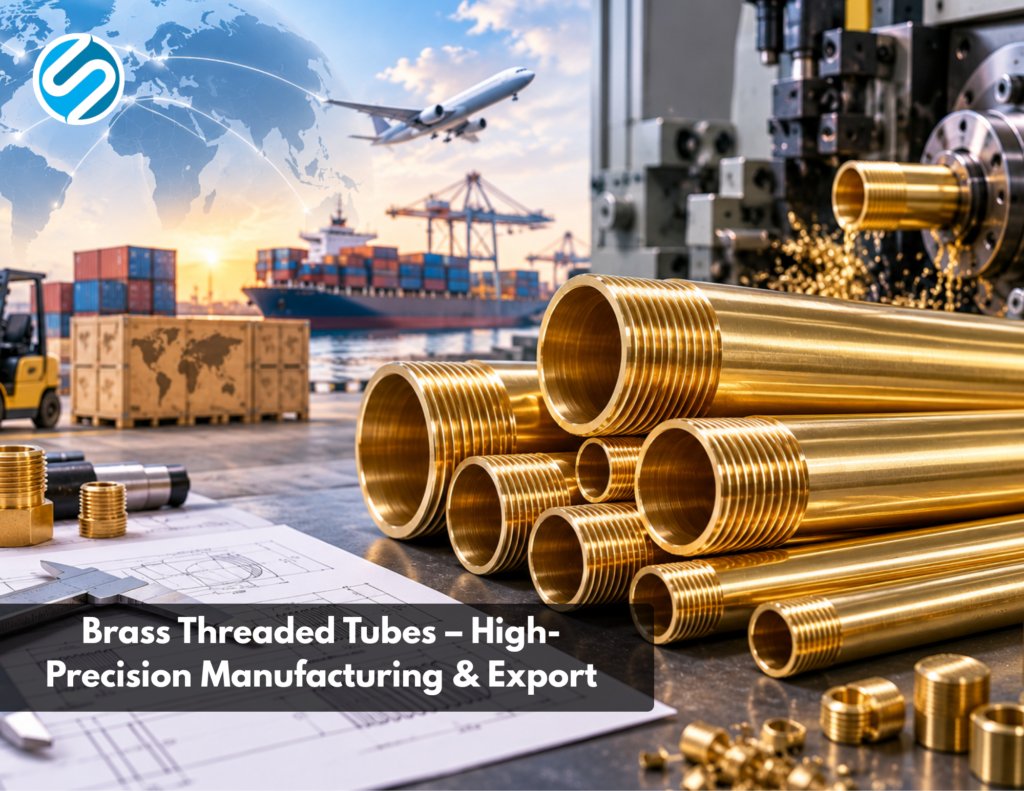
Brass Threaded Tubes hold plumbing, automotive, and industrial systems together where a leak-proof connection matters as much as the metal’s raw strength. Manufacturers in India and overseas need components that keep fluid and gas systems running without failure, especially where downtime is expensive. Suraj Brass Industries has spent years refining the process of producing threaded brass tube and pipe fittings that hold up to strict international tolerances. What follows covers how these parts get made, where they’re used, and what separates a properly tested batch from one that just looks fine on paper.
What Are Brass Threaded Tubes and Why They Matter
Brass Threaded Tubes are hollow cylindrical components machined with external or internal threads so they connect securely to valves, couplings, and other hardware. Brass resists corrosion naturally, which is why it shows up so often in water systems, gas lines, and hydraulic assemblies where moisture exposure never really stops. A brass threaded pipe isn’t just tubing with grooves cut into it. The pitch and depth of those threads are specified precisely enough to form a tight mechanical seal without extra sealant in most cases, and that’s what tells an industrial-grade fitting apart from something pulled off a hardware store shelf.
The Manufacturing Process Behind Precision Threaded Tubes
Every batch starts with alloy selection. The copper-to-zinc ratio affects machinability, strength, and how well the metal resists dezincification in harsh environments, so this step gets checked before anything moves further down the line. Once the stock clears inspection, it goes to CNC lathes, where operators cut internal and external threads to pitch specifications often held within a few microns. This is where a threaded brass tube actually takes shape, whether the job calls for a straight thread, a tapered one, or a custom profile for a specialty fitting. Buyers looking for related machined parts can check out Brass Turned Components, built on the same lathes with the same checks.
How to Thread Brass Pipe: Step-by-Step Overview
Knowing how to thread brass pipe correctly is what keeps cross-threading, leaks, and premature wear off the shop floor. Every operator at Suraj Brass Industries follows a documented sequence instead of eyeballing it, and the steps below reflect that process, adapted for anyone evaluating suppliers or writing up threading specs of their own. A gauge check happens after every step before a part moves forward.
- Select the correct pipe diameter and thread standard (BSP, NPT, or metric) before setup
- Secure the brass stock in the lathe chuck to prevent vibration during cutting
- Cut threads gradually in multiple light passes rather than one aggressive pass
- Deburr the threaded end and clean away metal shavings before inspection
- Gauge every thread for pitch accuracy and depth before final packing
Quality Control and Testing Standards
A visual check doesn’t cut it here. Each threaded brass tube batch gets tested for dimensional accuracy, thread engagement, and surface finish with calibrated go/no-go gauges, and anything that fails gets pulled before it reaches the next station. Random samples go through pressure testing to confirm they’ll hold under real operating conditions, which matters a lot for gas and hydraulic applications where a bad seal isn’t a minor issue. Every production run keeps its own traceability record, so if something goes wrong later, it can be traced back to the exact batch, machine, and operator.
Applications Across Industries
Brass Threaded Tubes turn up in more places than people expect, from household plumbing to hydraulic lines used near aerospace equipment. The corrosion resistance and reliable sealing make brass a practical pick anywhere a threaded connection needs to last years without attention. Even food processing and medical equipment lean on brass for its non-reactive surface.
Plumbing and Fluid Systems
In residential and commercial plumbing, a brass threaded pipe connects water lines, valves, and fixtures without the corrosion problems that eventually catch up with cheaper metals. Municipal water systems often specify brass for exactly this reason: it resists scaling and mineral buildup better than plastic or steel in a lot of conditions. Fewer replacements later means lower maintenance costs for whoever owns the building.
Automotive and Industrial Uses
Fuel systems, brake lines, and hydraulic assemblies in vehicles depend on a brass threaded tube for its vibration resistance and its ability to hold a seal through repeated pressure cycles. Industrial machinery builders specify the same fittings for pneumatic controls and coolant lines, where one leak can stop a whole production line. Suraj Brass Industries also supplies Brass Auto Parts for manufacturers who’d rather source matched components from one facility than manage several vendors at once.
Brass Threaded Pipe vs Brass Threaded Tube: Key Differences
People use these terms interchangeably in conversation, but there’s a real distinction worth knowing before placing an order. A tube gets measured by outside diameter. A pipe gets measured by nominal bore size, and that difference affects which fittings and thread standards apply. It matters most on cross-border orders, since BSP, NPT, and metric standards don’t always line up depending on where the shipment is headed.
Feature | Tube | Pipe |
Sizing method | Outside diameter (OD) | Nominal bore (NB) |
Wall thickness | Often thinner, precision-drawn | Standardized by schedule |
Common thread standards | Metric, BSP | NPT, BSP |
Typical use case | Hydraulic and instrumentation lines | Plumbing and gas distribution |
Surface finish | Polished or drawn finish | Standard mill finish |
Why Choose Suraj Brass Industries for Brass Threaded Tube Manufacturing
Working with one manufacturer for threaded brass components cuts down on the back-and-forth that usually comes with quality checks, shipping, and coordinating across time zones. Suraj Brass Industries runs out of Jamnagar, a region with a long history in brass manufacturing, and pairs that background with CNC machining and in-house testing. Buyers with a wider project scope can also look at Mild Steel Products from the same production network. Fewer vendors to manage usually means shorter lead times on repeat orders, too.
- In-house CNC machining with tight tolerance control on every batch
- Alloy composition tested before production begins, not after the fact
- Custom thread profiles available for BSP, NPT, and metric standards
- Documented traceability from raw material to finished, packed product
- Export experience across India, the Middle East, Europe, and beyond
Certifications and Compliance Buyers Should Check
Most experienced buyers ask for material test certificates confirming alloy grade and hardness, plus dimensional inspection reports tied to the actual batch shipping out, not a generic sample from the catalog. A supplier who hands these over without hesitation is usually one worth sticking with.
Compliance also shifts by destination country, so it’s worth confirming early whether RoHS, REACH, or local plumbing codes apply to a given order. A supplier who catches these differences before production starts, rather than after a shipment sits at customs, saves everyone a headache.
Common Mistakes to Avoid When Sourcing Threaded Components
New buyers sometimes lock in a thread standard without checking it against the equipment on the receiving end, and that mismatch only shows up after the parts have already shipped. Others chase the lowest price without asking whether the supplier tests every batch or just spot-checks a sample, which matters a lot more for anything safety-critical. A few extra days confirming specs in writing is almost always cheaper than reworking a shipment that’s already arrived.
Not every brass alloy threads the same way, either. Free-machining grades cut cleanly and hold tight tolerances, while others can gall or crack under aggressive threading if the process isn’t adjusted for them. Asking a supplier which grade they’d recommend for a specific job, instead of assuming one grade covers everything, tends to head off problems early.
Export Capabilities and Global Reach
Suraj Brass Industries ships threaded fittings and related brass components across several continents, with packaging built to survive long transit times and rough handling at ports. Export paperwork, including mill certificates and compliance documents, gets prepared for every shipment to keep customs delays to a minimum. That kind of experience matters to procurement teams who need a supplier that understands the technical side and the logistics side of international trade, not just one or the other.
Consistency on large export orders comes down to process discipline as much as machine precision, and that’s where a supplier’s actual track record says more than anything in a catalog. Clients weighing long-term suppliers can read more about how Reliable Brass Components support industrial buyers across European markets, which reflects the same standards applied here to threaded parts. A single prototype batch or a container-load order gets the same testing and paperwork either way.
Conclusion
Brass Threaded Tubes are a solid pick for engineers and procurement teams who need parts that hold up under pressure, resist corrosion, and meet exact thread specs. Every stage, from alloy selection to the final gauge check, shows up in how the part performs once it’s actually installed. Suraj Brass Industries pairs years of brass manufacturing experience with modern machining to turn out threaded fittings built for demanding conditions, backed by paperwork buyers can actually check.
Frequently Asked Questions
Q1: What makes Brass Threaded Tubes different from standard brass fittings?
The thread pitch and depth are machined precisely, which gives them a tighter mechanical seal than standard push-fit or unthreaded fittings.
Q2: How to thread brass pipe without damaging the material?
Cut in light passes, keep the workpiece secure, and gauge each pass so you don’t over-cut or crack the metal.
Q3: What thread standards does Suraj Brass Industries support?
BSP, NPT, and metric, depending on where the shipment is headed and what it needs to fit.