
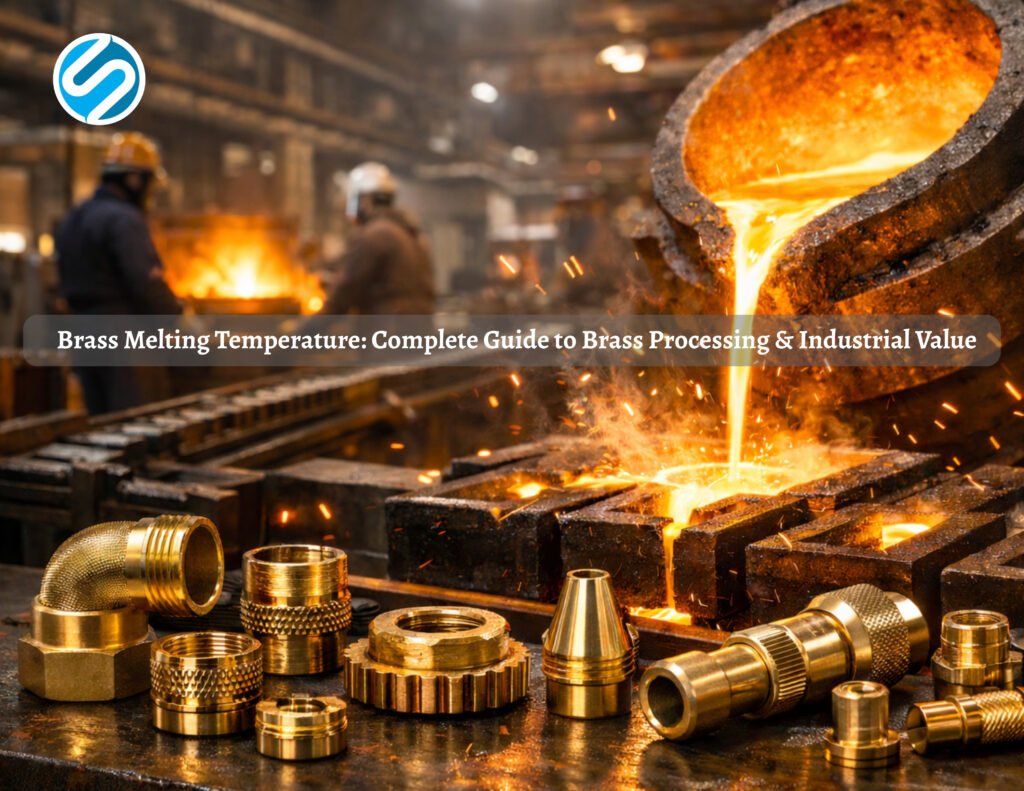
Introduction
Industrial and engineering applications frequently utilize brass due to its inherent strength, corrosion resistance, and ease of machining. In any industrial activity with brass, knowledge of brass melting temperature is important in order to optimize casting, forging, and precision manufacturing. This is true for any activity with brass fittings, terminals, inserts, and turned parts. Operating brass in an optimal range of melting temperatures improves quality and reduces waste.
The brass melting temperature because of the differing ratios of copper and zinc in the alloy. Grades of brass have differing responses to heat and so, during manufacturing, the meticulous observation of the brass temperature in the furnace is paramount. This enhances the quality of strength, finish, and tolerance of the alloy.
What Is the Temperature for Melting Brass?
Given the composition of brass melting temperature of brass typically ranges from around 900 °C to 940 °C. Here, it is relevant to state that having an exact alloy composition is impossible, as we have stated before that brass is not a pure metal.
The brass melting point dictates the ease with which manufacturers are able to shape the alloy into the desired parts. If the temperature is lower than the melting point, the flowing of the alloy into the desired mold can be hindered. If the temperature goes beyond the melting point of brass, zinc can be lost due to oxidation. This is why the melting temperature of brass is key to the manufacturing process.
Brass Temperature During Manufacture
Some of those are brass temperature, furnace type, purity of raw materials, and batch size. The purer the raw materials, the more uniform the melting and the greater the strength of the final product.
Manufacturers control the heating rate. While rapid brass heating may reduce time, it may also lead to non-uniform melting. Focused heating of the brass helps avoid the creation of internal defects and maintains uniformity of the final product.In addition to bath fittings, they also specialize in brass components.
Some of the main factors are
- Ratio of copper to zinc in the alloy
- Distribution of heat and efficiency of the furnace
- Quality of the raw brass (scrap or ingots)
- Melting time and size of the batch
- Controlled cooling after the casting
Brass Melting Point in Different Alloys
Brass grades will have varying melting points. This is the reason for the melting point of brass melting point.
Increased copper concentration will lead to a greater range of melting point of brass metal, but the addition of lead or tin may lower or improve the casting and machining. Knowledge of melting points helps in selecting an appropriate alloy based on its intended purpose.
Common Brass Alloy Uses:
- Cartridge brass for construction parts
- Free-cutting brass for computer numerically controlled (CNC) machining
- Naval brass for maritime parts
- Brass that contains no lead for plumbing fixtures
- Decorative brass for spirit/cosmetic products
Why Brass Heating Matters in Manufacturing
With modern technology, industrial brass heating can reach specific shapes and include both precision and strength. Computer numerical control (CNC) machining is used to produce products to near-net shapes. For casting brass, liquid brass must be able to fill a mold. For forging, brass must remain pliable enough to undergo deformation; however, it cannot be too hot, or it will be too cold to work and will fracture.
With the correct brass melting temperature, manufacturers can be more productive and have lower rejection rates. With consistent heating of brass, life expectancy and allowable wear of tools used to machine the brass are improved. Fewer secondary operations are needed to finish parts after initial machining, and overall, production is more efficient.
Perfect heating of brass also saves energy. Furnaces that operate at the correct brass temperature use less energy and reduce the risk of overheating. This also lowers production costs while improving energy sustainability.
Industrial Applications of Brass
Because of the ability to work it and the strength, brass is used in many industries. As a result of the correct brass melting temperature, components can be made to suit the more demanding requirements.
Major Applications:
- Electrical components such as terminals and connectors
- plumbing fixtures and valves
- Precision-turned components
- Automotive parts
- Industrial fasteners and inserts`
For each of the areas mentioned, it is necessary to have the proper heating and melting temperature of brass.
Brass vs. Other Metals
Brass, as compared with either steel or copper, is a much easier metal to work with. Because of the lower melting temperatures that copper and brass have, it also makes casting and finishing the products a lot more beneficial to have lower energy requirements, as time and costs associated with finishing are lower.
Reduces costs without sacrificing quality due to easier machining and faster melting cycles. melting point of brass metal which allows for high-volume production and time-sensitive industries. For precision manufacturing and quality component production, explore our detailed guide on Brass Casting.
Common Challenges in Brass Processing
While processing of brass is easier than most metals, improper control of temperatures can lead to serious issues with processing. Zinc can evaporate with too much heat and too little heat will produce an incomplete mold fill. Poor calibration of the furnace can lead to inconsistent melting.
Manufacturers solve these issues by tracking the brass melting point closely and using modern monitoring systems. Proper handling during brass heating ensures stronger and cleaner finished parts.
Common Problems to Avoid:
- Defective surface porosity
- Incomplete casting fill
- Excess oxidation
- Zinc loss due to overheating
- Uneven grain structure
Best Practices for Better Results
Temperate control is a major part of processing high-quality brass. Maximum temperatures should not be the goal, but rather the consistency across the brass processing. Each individual batch should be monitored and tested.
With the right brass melting temperature, it makes it possible to make high-quality products with specified standards and less scrap. The end brass products will meet the necessary industrial standards. Manufacturers producing High-Precision Brass Products rely on brass for its consistent machining and long service life.
Conclusion
Understanding brass melting temperature is essential for efficient production, better casting, and strong industrial performance. Every brass alloy has a melting point. This means manufacturers have to be very careful with the furnace settings and the quality of the materials they use. They also have to control the heating cycles. The right brass temperature is important because it makes the brass flow better, gives it a finish and makes it last longer. This is useful for things, like fittings and terminals and precision components. Knowing the melting temperature of brass is helpful for businesses. It helps them get results and reduce waste. This also increases the value of their products over time. The melting point of brass metal is something that businesses need to know to achieve these things.