
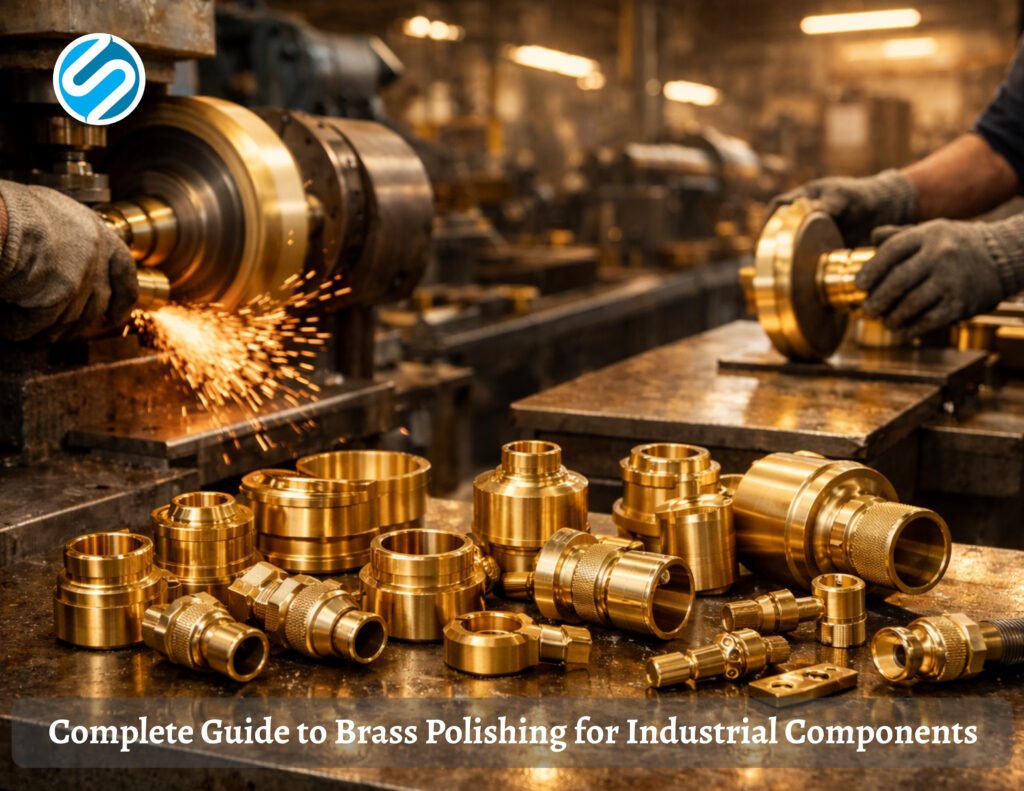
Brass is a common choice for a finishing element due to its appealing aesthetic and corrosion resistance. As a brass component is handled or exposed to the environment, its surface may become dull. Because of this, brass polishing is a critical step in maintaining an unblemished product and a quality manufacturing process. Well-executed brass polishing ensures a product is clean and bright and helps in the sale of the component.
Brass fittings, inserts, terminals, fasteners, and decorative hardware employed in manufacturing benefit from brass polishing. A polished finish demonstrates the quality of the work and also assures the customer of a good product. Polished brass products, whether made in the US or abroad, make things better and show off the manufacturer’s pride.
What is polishing brass?
Brass polishing is the process of restoring the outer layer of brass by removing scratches, oxidation, and crud. This process of removing tarnish gives the brass parts a mirror-like finish, making them suitable for either industrial or decorative uses. This process can be hand-done, but for mass production it is typically done by machine.
Advanced brass finishing methods such as coating, brushing, or plating are often done in conjunction with brass polishing. This step improves both the protective quality and the final appearance of the product.
Brass polishing is important in business
Industrial consumers like finished goods that appear professional and work well. Brass polishing makes it look better and work better, which adds value to a product.
Main Benefits:
- Makes a product more appealing with a high-quality finish
- There are no more oxidation or surface flaws
- Improves accuracy in surface fitting
- Gives component parts a longer life span
- Gets polished brass ready for shipping
Brass polishing is used on valves, fittings, connections, and other precise parts because of these benefits. Many of these manufacturers meet international standards and export their brass bath fittings. In addition to bath fittings, they also specialize in brass components.
How to Polish Brass – Step-by-Step Process
For manufacturers, maintenance teams, and buyers, having knowledge on how to polish brass is helpful. The techniques vary depending on the parts’ size, shape, and quantity.
Step 1: Clean the surface
Cleaning the part to get rid of dirt and other things is what this phase is all about. This process lets the polishing compound get to the metal without any problems.
Step 2: Put on the Compound
Brass metal polish is applied to the surface. This will improve the luster and remove surface dullness and marks. The choice of brass metal polish is determined by the desired finish.
Step 3: Machine Polishing
For high-volume production, brass polish machine are used to enhance uniformity and consistency. Modern machines can efficiently polish large volumes of fittings, inserts, and hardware.
Step 4: Final Buffing
Buffing is done to impart high reflectivity to the finish. This is what gives the product the desired look: a premium polished brass material.
Tools for polishing brass
Different polishing tools are used depending on what needs to be made.
Tools by hand
- Cloths that are soft
- Wheels for buffing
- Hand pads
- Brushes
- Small polishing kits
Manual polishing is best for prototypes, special orders, and decorative objects.
Automatic Tools
A brass polish machine is perfect for firms that make a lot of things since it makes the same high-quality products every time, cuts down on labor costs, and speeds up the process.
Polishing Compounds
Brass metal polish of professional quality is used for surface restoration and protection. Brass metal polish during maintenance can help sustain a brilliant finish for an extended duration.
Brass Finishing vs. Brass Polishing
Despite the terminology, the two processes are not the same. Brass finishing is concerned primarily with the luster, smoothness, and elimination of surface defects. “Finishing brass” is an overarching term that encompasses polishing, coating, plating, brushing, and any protective processes.
For instance, a part may undergo polishing and afterwards get brass finishing for additional protection and an aesthetically pleasing texture. Combining both methods offers substantial enhancement.
Applications of Polished Brass Material
Polished brass is used in many industries due to an attractive appearance and excellent durability.
Common Uses:
- Electrical terminals and connectors
- Plumbing fittings and valves
- Decorative handles and hardware
- Automotive precision parts
- CNC engineered products made from polished brass material
High-demand sectors often prefer polished brass material because it looks premium and performs reliably.
Maintenance Tips for Long-Lasting Shine
Once components are polished, regular care helps preserve their finish.
Best Practices:
- Clean with a soft, dry cloth
- Avoid harsh chemicals
- Use brass metal polish when needed
- Store in a dry place
- Inspect surfaces regularly
Learning how to polish brass for maintenance purposes can help businesses extend the life of installed products.
How to Pick the Best Way to Polish
The choice depends on the type of technique and a mix of the amount of production, the desired finish, and the budget. Manual methods are better for jobs that need special care, like bespoke projects. On the other hand , automated methods are great for making a lot of things at once.
For companies that make a lot of things a brass polish machine can help get the work done faster and make the company work better. If you are working on a project you might want to know how to polish brass by hand because manual methods can be a good choice for small-scale brass polishing projects, like these small-scale brass polishing jobs. Manufacturers producing High-Precision Brass Products rely on brass for its consistent machining and long service life.
Conclusion
Industrial components require Brass polishing to add value and increase the quality. Manufacturers can offer products that have a higher worth aesthetically by implementing quality tools, brass polishing, and polishing techniques.