
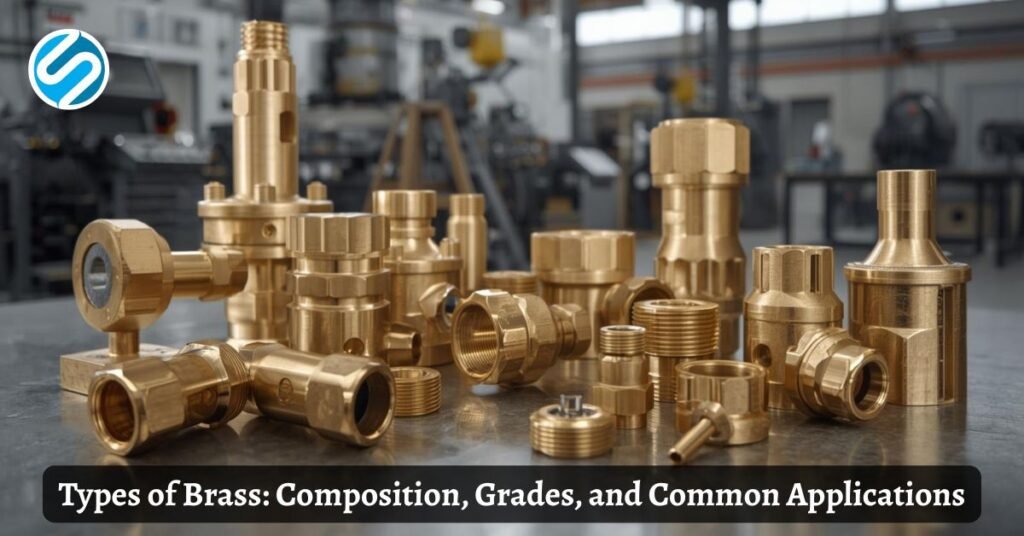
Brass is a popular alloy because it is strong, doesn’t rust, and is easy to work with. Understanding the types of brass is essential for manufacturers, engineers, and buyers who want the right material for specific applications. Brass is notably important to modern production in the fields of plumbing, electrical systems, and precision engineering. India has a major brass industry, and Jamnagar is a well-known place where brass is made. Working with a trusted brass manufacturer in Jamnagar will help you get high-quality, exact alloys and solutions that are made just for your needs. This guide explains how many types of brass are there, their composition, grades, and common applications across industries.
What Is Brass and Why Are There Different Grades?
Being a copper and zinc alloy means that brass is mostly made of copper and zinc. The unique characteristics will differ as the amounts of the components and other metals added change. The different types of variations of brass can be attributed to the fact that no single alloy can satisfy industrial needs.
Various factors come into play when determining specifics affecting hardness, tensile, strength, corrosion resistance, electrical conductivity, and machinability. To understand this better, it is important to first explore what is brass material and how alloying elements influence its performance. Manufacturers adjust the copper and zinc ratio to produce specific types of brass material tailored for use in electrical, plumbing, marine, and precision engineering.
How Many Types of Brass Are There?
When working in the metal selection field, one of the most frequently asked questions is this: how many types of brass are there? While there is no universally accepted answer to this question, it is possible to classify brass alloys into broad categories according to the composition and intended application. Generally, brass materials can be subdivided into ‘alpha’ and ‘beta’ categories, as well as several specialized and commercially available grades, and an ‘alpha-beta’ category.
Most importantly, however, is that it is the functional brass types that industry is more often concerned with, as brass of each category is designed to perform specific functions. This is why it is important to know how many types of brass are there, and why buyers need to analyze and justify their selection of raw and finished components in order to improve the precision of the engineering.
Types of Brass and Their Composition
Zinc content and alloying additions are the primary factors in the classification of the various types of brass and their composition. Moreover, the classification directly impacts the mechanical and chemical properties of the brass.
Alpha Brass
Alpha Brass has about 35% zinc, along with a larger proportion of copper. This combination yields very good ductility and cold-working ability, which leads to cracks when work is performed in shaping and forming.
Alpha-Beta (Duplex) Brass
Alpha-Beta brasses have 35 to 45% zinc in their make-up. Both Alpha and Beta phases increase strength relative to Alpha Brass. This provides a good combination for hot working and high strength applications.
Beta Brass
Beta Brass has a zinc content of 45% or more. This makes it harder and stronger, although it is less ductile. Applications involve cast or hotworked components, and strength is of primary concern rather than formability.
These categories are the foundation for the classification of the types of brass used in various applications, exemplifying how composition impacts the choice of materials.
Different Types of Brass Based on Industry Usage
In addition to a metallurgical classification, different types of brass have been identified based on specific attributes to the applications designed for it. These brass types are widely recognized in manufacturing and trade.
Cartridge Brass
Cartridge Brass is defined with excellent formability and high resistance to corrosion. Applications include electrical components, fasteners, and decorative work, as well as the appearance and durability of the materials.
Brass alloys contain copper, zinc, and other elements which help to achieve desired parameters and specifications, such as corrosion resistance, machinability, and mechanical properties.
Naval Brass
Naval brass has zinc and copper, as well as small amounts of tin, which help with corrosion resistance to seawater. So, it can be used in areas such as ship fittings, marine hardware, and other coastal infrastructure.
Free-Cutting Brass
Free-cutting brass has a small percentage of lead, which helps with machinability as well, and it is used in many industries for precision parts, fittings, and connectors that require smooth finishes and close tolerances.
Selecting different types of brass depends on working conditions, production processes, and environmental conditions.
Types of Brass Material Used in Manufacturing
Selecting types of brass material in a manufacturing environment helps improve efficiency and a product’s performance. Across a wide range of industries, brass alloys have helped to manufacture precision engineered solutions in the form of parts and fittings.
Manufacturers often depend on specific brass components for applications that demand a high degree of dimensional accuracy, repeatability, and outstanding corrosion resistance. The wide range of types of brass means that it can be machined, forged, or cast to fulfill the design requirements. The right brass alloy determines the lifespan as well as the reliability of any product, from electrical terminals to plumbing fittings and industrial connectors.
Common Applications of Brass Types
Because of the many useful properties of brass alloy, it is used in many different industries including:
- Electronic and electrical components
- Fittings and valves for plumbing
- Parts for engineering and automotive
- Components of industrial machinery
- Hardware for decorative and architecture
Each application benefits from specific brass types, reinforcing the importance of understanding types of brass and their composition before material selection.
Choosing the Right Brass Type for Your Application
Selecting the correct alloy involves more than just knowing how many types of brass are there. buyer’s and a manufacturer’s understanding of the operating conditions, the mechanical constraints, and the economic constraints present in the scenario in question. These include the corrosion resistance, the environment to which the alloy will be exposed, and the required strength and machinability of the alloy.
Using the appropriate type of brass material guarantees optimal performance and economic reliability over time. If the need is precision machining or the material must be durable and impervious to corrosion, knowing the different types of brass will assist in eliminating material failure and other inefficiencies in production.
Conclusion
The types of brass are too many, and knowing the various types of brass will guide the selection of appropriate materials for the various engineering and manufacturing processes. Every alloy performs a different function based on its composition. The engineering and manufacturing industries will learn to optimize the performance, strength, and durability of the materials they use, based on their compositions and the specific types of brass they use, by acquiring knowledge on the various types of brass available.
For more insight into precision manufacturing and its industrial applications, see Quality Brass Components for Every Industry, where you can find out how expertly engineered brass provides solutions supports various sectors around the globe.