
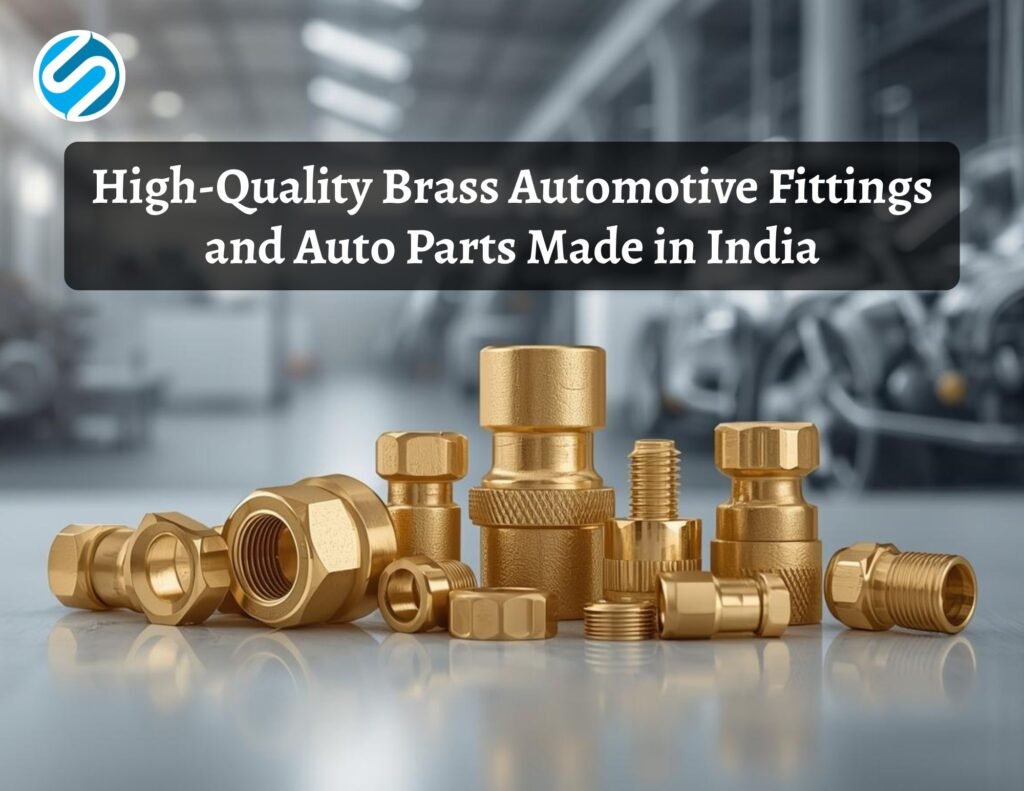
The engineering and design of automotive components contribute to the functionality and reliability of a vehicle, and the automotive brass fittings have long been trusted for building leak-proof, durable, and vibration-resistant connections to help ensure the reliability and support critical automotive system applications, including fuel and brake lines, and cooling and lubrication systems. Over the years, India has been a strong brass automobile parts supplier on the world market due to the advanced manufacturing infrastructure and IST-level machining. This is why brass automotive fittings continue to represent the best value to automotive OEMs and other international customers.
What Are Brass Automotive Fittings?
Brass automotive fittings are components that are designed to connect and or control, and or support the mechanical and or fluid systems of a vehicle. Because of the strength, corrosion resistance, and the ability to machine brass, automotive fittings are an ideal material for the long life and high performance that is demanded of automotive components.
These fittings are commonly found in:
- Fuel distribution lines
- Brake and hydraulic systems
- Cooling and radiator assemblies
- Oil circulation lines
- Pneumatic and vacuum systems
Automotive engineers are able to ensure the safe and efficient operation of a vehicle throughout its lifecycle due to the durability and the exacting manufacturing tolerances of the fittings.
Types of Brass Automobile Parts Used in the Automotive Industry
There is an extensive assortment of brass auto parts constructed and crafted to satisfy the intricate challenges of modern vehicles. They include:
Fuel Line Connectors
An integral part for supervising the flow of fuel and providing leak-free operational performance.
Brake Line Fittings
Used in the hydraulic braking systems where there is a need for high tensile strength and the ability to resist pressure. Naturally, part of this section is brass automobile parts.
Battery Terminals
Provides electrical connections and stops failures caused by rust.
Sensor Housings
Covers are protective and strong for sensors measuring temperature, pressure, and the engine.
Hose Barb Fittings
Fastens hoses in place for systems that transfer coolant, vacuum, or oil.
Adapter Components
Assist in bridging the connection of pipe, tube, and hose of various measurements that are part of a vehicle’s structure using durable brass auto parts.
Benefits of Using Brass Auto Parts in Vehicle Manufacturing
Brass has continued to be one of the most dependable materials in the automotive sector because of the following engineering and performance benefits:
- Superb strength-to-weight ratio
- Leak-proof construction for safety-critical systems like brakes and fuel lines
- Excellent resistance to heat and vibrations
- Good machinability for close tolerances and fine threaded precision
- Compared to mild steel or aluminum, it has a longer lifespan
- Value for money production for large-scale OEM supply
- Naturally corrosion-resistant while enhancing the overall durability
These benefits make brass an ideal choice for both conventional and modern automotive applications.
Why India Is a Global Hub for High-Quality Brass Automotive Fittings
India, especially Jamnagar, has a commanding position in the world automotive brass components market. People say that Jamnagar has a large network of specialist manufacturers and suppliers of high-precision parts for the global market.
Key reasons for India’s leadership include:
- A Well-Organized Ecosystem for Brass Manufacturers in Jamnagar
- Availability of an educated workforce, modern production technologies
- Custom OEM Specification Machining
- ISO Certified Facilities Ensuring Quality
- Effective Logistics and Infrastructure for Exports
This has led to a large number of international customers relying on brass auto parts manufacturers in India for quality and consistent engineering components.
Manufacturing Process: How Indian Brass Auto Parts Are Produced
Brass automobile parts of superior quality go through several production processes for optimal precision, strength, and functionality, which include the following:
- Selection & Composition of the Alloys to Be Used
- Forging or Extruding to Illustriate Shape
- CNC and VMC Precision thread shaping and finishing machine processes
- Turning, drilling, and knurling for the improvement of shape consistency and hold
- Quality Assurance with gauges, pressure, and leakage testing
- Surface finishing through processes, including nickel and chrome plating, and finishes for natural brass
These processes cement each component to meet the required standards for an automobile.
Quality Standards Followed by Indian Manufacturers
Indian producers of brass parts for automobiles ensure quality compliance of:
- Proximity for accurate assembly
- Zero leakage detection for high pressure
- Corrosion-proof standards for extreme environments
- Finishing for uniform and smooth surfaces
- Full compliance with and standards of the Original Equipment Manufacturer
- Documentation and packaging that is ready for export, plus the appropriate codes
Due to these standards, brass turned components of extended durability are certified for overseas markets.
Industries and Applications Using Brass Automotive Fittings
Brass automotive fittings serve multiple industries beyond passenger cars, including:
- Commercial vehicles and transport fleets
- Electric and hybrid vehicles (EVs)
- Agricultural machinery and tractors
- Off-highway & construction equipment
- Refrigeration and HVAC line-set applications
- International automotive and engineering exports
Their versatility allows them to operate in multiple sectors.
How to Choose the Right Brass Auto Parts Manufacturer in India
When sourcing automotive brass parts, the following should be considered:
- Assess machining capabilities and CNC systems.
- Verify certifications for alloys and materials.
- Consider OEM experience along with industry specialization.
- Examine quality assurance and testing procedures.
- Confirm customization capabilities and dependable lead times.
- Evaluate experience with exports for smooth international shipments.
Trustworthy industry partners guarantee performance and uniformity.
Comparison: Brass vs Other Materials for Automotive Fittings
Brass vs Steel: Brass is easier to work with and doesn’t rust, while steel is heavy and more likely to rust.
Brass vs Aluminum: Aluminum is cheaper and lighter, but brass is more durable and withstands higher pressures and temperatures.
Brass vs Plastic: Plastic is cheaper but less suitable for systems under higher pressures and temperatures.
Brass is the best option for applications requiring strength, durability, resistance to thermal changes, and leak-proof integrity.
Emerging Trends in Brass Automotive Fittings Manufacturing
The industry is evolving rapidly with innovations such as:
- Lightweight and energy-efficient brass elements.
- Specialized connectors for electric and hybrid vehicles.
- Micro-machined intricate components for sensors and control systems.
- High-pressure fittings suitable for modern engines.
- Sustainable materials accompanied by recyclable manufacturing processes.
These innovations are bolstering the future of automotive engineering.
Conclusion
India remains at the forefront of the world with advanced manufacturing of brass automotive fittings that are durable, efficient, and produced with high accuracy. As a leading hub for Industrial Metal Components, India delivers stable value and performance over time thanks to its strong infrastructure, talented manufacturing teams, and extensive global supply capabilities. Companies and businesses are able to confidently obtain automotive components that incorporate modern features while utilizing India’s advanced expertise in metalworking.
FAQs
1. For what purpose are brass automotive fittings meant?
These fittings are for fuel lines, braking systems, cooling systems, and lubrication circuits, and are found in pneumatic assemblies.
2. Can brass auto parts withstand high pressure?
Yes, brass can handle tremendous pressure and heat, which makes it resistant to rust.
3. In what ways are brass automobile parts manufactured in India?
The processes include forging, CNC machining, drilling, threading, testing, and finishing.
4. Do brass fittings perform well in extreme heat and vibrations?
Yes. Brass fittings work in extreme heat and absorb vibrations well.
5. Why choose Indian manufacturers for brass automotive components?
India offers exceptional machining capabilities, developed supply chains, strong infrastructure for exports, and favorable pricing.