
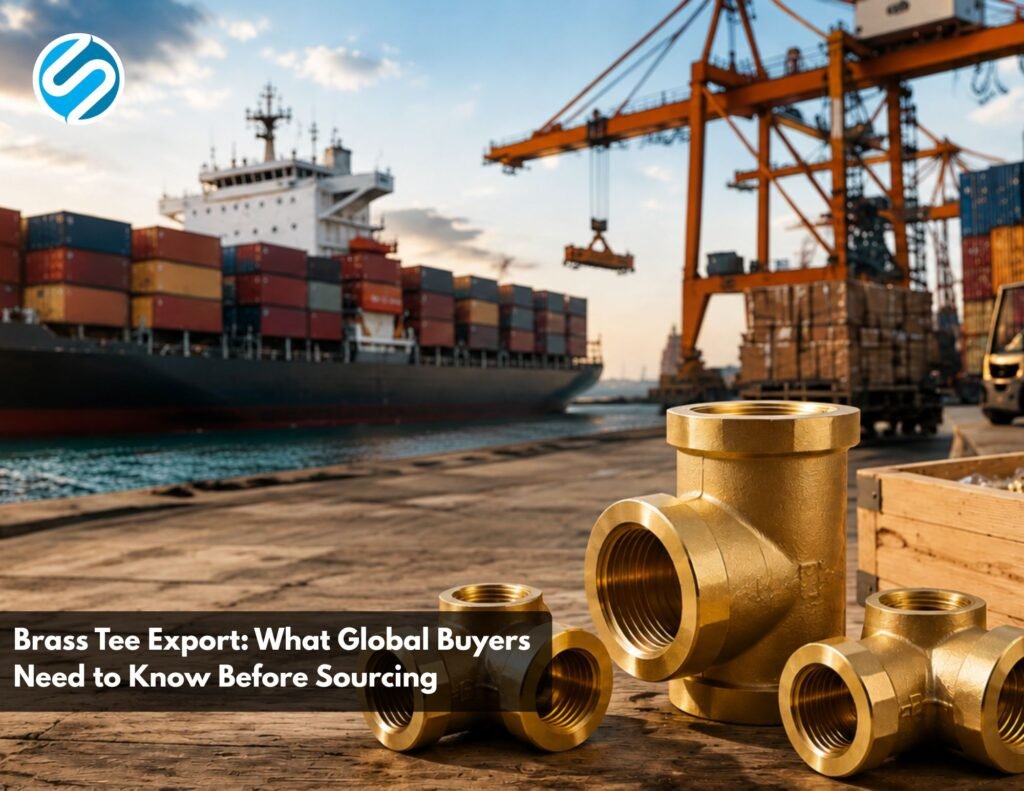
If you’re importing plumbing or fluid-control parts, you’ve probably already run into brass tee export from India while sourcing. These little T-shaped fittings don’t get much glory, but they’re holding together plumbing lines, HVAC systems, irrigation setups, and industrial piping in more places than you’d think. Get the sourcing wrong and you’ll find out fast, usually at the worst possible time. So here’s what actually matters: the standards worth checking, the paperwork you can’t skip, and how to tell a solid supplier from one that just photographs well.
What a Brass Tee Fitting Actually Does
A brass tee fitting joins three pipe sections in a T shape, so fluid or gas can branch off in a new direction without leaking out the joint. Brass handles pressure decently and shrugs off corrosion, which is basically why it ended up everywhere: plumbing, gas lines, farm equipment, machinery.
You can browse the full range of brass tee fittings built for both local use and export, across sizes, thread types, and alloy grades.
Demand hasn’t slowed down either. Construction and infrastructure work across Europe, the Middle East, and North America keeps leaning harder on Indian manufacturers to keep the supply steady.
Why Buyers Keep Coming Back to Indian Manufacturers
India’s become one of the default hubs for anyone hunting an export brass tee fitting partner. Jamnagar especially, sometimes called India’s brass city, is stacked with manufacturing units that already meet ISO standards and international plumbing codes.
Quality Control Isn’t Optional
Decent manufacturers test every batch for pressure tolerance, leaks, and dimensional accuracy. Before you confirm an order, ask for material test certificates; don’t just take their word for it. Alloy composition is what actually determines how long the fitting lasts and how well it fights corrosion.
Lower Cost Without Cutting Corners
Skilled labor, steady raw material supply, mature production setups. Put those together and Indian manufacturers can price competitively without quietly downgrading quality. That’s really the whole reason buyers keep coming back.
What to Check Before Picking a Brass Tee Exporter in India
Finding a decent brass tee exporter in india takes more than comparing quotes on a spreadsheet. Look at production capacity, where the raw material actually comes from, whether they test in-house, and how much real export paperwork experience they have.
A quick checklist before you shortlist anyone:
- Valid export licenses (IEC code and RCMC certification)
- ISO 9001 or an equivalent quality certification
- In-house testing for pressure and leaks
- Clear disclosure of material composition (CW617N, C37700, etc.)
- Flexibility on order size, from samples to bulk runs
- A track record of shipping on time, not “usually” on time
- Suppliers who actually respond when you follow up
Spotting a Leading Brass Tee Exporter
A leading brass tee exporter usually has years behind them, a wide catalog, and clients across a few different countries who’ll actually vouch for them if you ask. Don’t skip asking for third-party inspection reports, or just test a sample batch yourself before committing to the full order.
For a broader look at how Indian manufacturers stack up on capacity, certifications, and global reach, the overview of Brass Exporters in India is worth a read before you finalize a shortlist.
Sourcing in Bulk: What a Wholesale Exporter Should Offer
Ordering in volume means you need a brass tee wholesale exporter who can hold quality steady across big runs, not just on the small sample batch that happened to look great.
Worth doing before you scale up an order:
- Ask for a pre-shipment sample batch before full production starts
- Confirm how flexible they actually are on minimum order quantity
- Get clarity on packaging standards for long shipments
- Nail down payment terms early (LC, TT, or partial advance)
- Double-check lead times against your own deadlines, not theirs
Getting Through the Export Process
Paperwork You Can’t Skip
Any supplier worth working with handles the basics without you having to chase them: commercial invoice, packing list, certificate of origin, material test certificates. Skip these and customs will hold your shipment hostage.
Packaging Matters More Than People Think
Sea freight can drag on for weeks, and brass corrodes or dents fast if it’s packed carelessly. For a sense of how brass components are actually engineered for demanding manufacturing use, the piece on Brass Components for Manufacturing is worth a look.
Mistakes Buyers Make More Often Than You’d Expect
Picking an export brass tee fitting supplier on price alone, without checking material certificates or export history, is one of the most common ways buyers get burned.
Another one: a brass tee wholesale exporter that just doesn’t have the capacity to hold quality steady across large orders. That usually shows up as delays and inconsistent batches later, right when you can least afford it.
A few more things worth watching for:
- Skipping third-party quality inspection
- Overlooking customs documentation requirements
- Working with suppliers who have no real export history
- Underestimating how long shipping actually takes
- Not locking down payment security terms upfront
Suraj Brass Industries: Built for Export
As a brass tee exporter in india, Suraj Brass Industries manufactures fittings using CW617N and other export-grade brass alloys, tested for pressure resistance and long-term durability.
Our recent Brass Products Export from India to Mexico shipment is a decent example of how we handle documentation, packaging, and customs coordination on long-distance orders.
Before You Sign Off on a Supplier
Confirm certifications, request samples, get payment terms in writing, before finalizing anything with your export brass tee fitting supplier. Takes a bit of extra time upfront. Saves a lot more later.
Working with a supplier who actually communicates and gives you realistic production timelines makes the whole process a lot less stressful, especially the first time around.
Conclusion
Sourcing the right brass tee fitting supplier isn’t as complicated as it feels once you know what to look for. Whether it’s a small trial batch or a full container load, working with a leading brass tee exporter like Suraj Brass Industries means quality and delivery you can actually plan around instead of just hoping for. And if you’re placing repeat orders, sticking with one reliable brass tee wholesale exporter tends to beat hopping between suppliers every few months.
FAQs
1. What is a brass tee fitting used for?
It connects three pipe sections in a T shape, letting fluid or gas branch off while resisting corrosion and pressure.
2. How do I check if a supplier of brass tee fittings is legitimate?
Look at their export license, ask for certifications, and talk to a few past clients to see if they’re actually reliable in export markets.
3. What certifications should a brass tee supplier have?
ISO 9001 certification, valid IEC and RCMC registration, and material test certificates for each batch.
4. Is it worth ordering brass tees from India in bulk?
Usually, given the established supply chains and skilled manufacturing, but confirm MOQ and lead times before you commit.
5. What paperwork is needed to export brass tees from India?
A commercial invoice, packing list, certificate of origin, and material test certificates.